건선
Psoriasis
For further information, please visit “drleepediatrics.com” and then Search.
더 많은 정보를 얻으시려면 drleepediatrics.com Search에서 찾으세요.
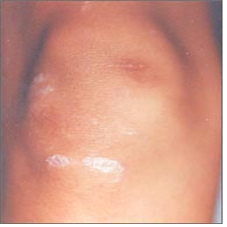
▴ 사진 541. 무릎에 난 건선 drleepediatrics.com 참조
Copyright ⓒ 2012 John Sangwon Lee, MD. FAAP
▴ 사진 542. 팔꿈치에 난 건선 drleepediatrics.com 참조
Copyright ⓒ 2012 John Sangwon Lee, MD. FAAP
Copyright ⓒ 2012 John Sangwon Lee, MD. FAAP
■ 건선의 개요
● 만성, 염증성, 전신 질환으로 비늘로 덥혀 있는 홍반성 마른 반점(패치)이 있고, 비 전염성이고, 자가면역성 피부 질환을 건선이라고 한다.
● 성인 건선 환자들의 약 3분의 1은 16세나 그 이전부터 발병된다.
● 건선으로 신체적 결점이 나타나고 남들의 눈에 띌 수 있도록 외관상 오점이 피부에 생기고 정신적 문제도 생길 수 있다.
● 우울증, 비만증, 심근경색, 신진대사 이상 등이 동반될 수 있다(출처; NEJM January 17, 2008 p. 241).
■ 건선의 종류
나이에 따라 건선은 다음과 같이 여러 종류로 분류한다.
① 선천성 건선,
② 신생아 건선,
③ 소아 건선,
④ 성인 건선 등이 있다.
■ 건선의 형태와 건선이 난 신체의 부위에 따른 건선종류
① 농포성 건선 (Pustular psoriasis)
② 적상건선 (Guttate psoriasis)
③ 홍반성 건선 (Erythrodermic psoriasis)
④ 심상선 건선 (Psoriasis vulgaris)
⑤ 플라크 건선 (Plaque psoriasis)
⑥ 역형성 건선(Inverse psoriasis)
⑦ 손바닥 발바닥 건선 (Palmar and plantar psoriasis)
■ 건선의 원인과 역학
● 건선의 원인은 확실히 모른다.
● 연소성 류마토이드 관절염이나 크론병(Crohn’s disease)의 원인과 비슷하게 자가면역 문제로 생긴다고 한다.
● 소아 건선의 대부분은 인간 백혈구 항원 대립인자 B13, A2와 CW6로 유전되는 병이다. 그래서 가족 병력에 가족들 중 누군가가 건선이 있었던 병력이 있으면 이 병이 생길 수 있다. 또 T 세포 매개로도 생긴다고 한다.
● 건선의 2%는 생후 2세 이전에 시작한다(Contemporary Pediatrics June 2008. p.30).
● 소아 피부과에서 피부과 질환 환자들의 10%를 차지한다고 한다.
● 때로는 사춘기 아이들의 팔과 다리에 심하게 생기고 몸통의 부위로 퍼지기기도 한다.
● 특히 사춘기 아이에게 건선이 생기면 우울할 수 있고 학교 학습 장애도 생길 수 있다.
● 건선의 환부가 신체 전 피부 면적의 10% 이상 차지하면 중증 건선이라고 부른다.
● 성인 건선 환자들의 31~45%는 소아기 때부터 시작된다고 한다.
● 신생아기에도 건선이 생길 수 있다.
● 건선으로 은색 비늘이 생길 수 있다.
● 소아 건선으로 가려운 증상이 생길 수 있고, 성인에서 보는 건성과 달리 소아 건선 반점은 아주 적어서 소아 건선을 진단하는데 어려운 점이 있다.
● 연쇄상 구균 감염 질환을 앓고 난 후 적상 건선이 생길 수 있고 신생아 영유아들의 기저귀 차는 부위에 건선 기저귀 피부염도 생길 수 있다.
● 얼굴, 몸통, 팔꿈치, 무릎, 기저귀 차는 부위, 두피, 손톱(손톱에 생기는 건선 발병 %는 40%) 등에 건선이 나타날 수 있다.
● 건선이 곪으면 농가진처럼 보이고 때로는 환상으로 나타나기도 한다.
● 건선이 손톱에 생길 수 있는데 손톱에 건선이 생기면 손톱에 함몰 현상이 생기기도하고 착색 또는 탈색될 수 있으며 손톱 과도각화증이 생길 수 있다.
● 건선 환자들의 5%가 아토피 피부염이 있으며 두피 건선으로 생긴 비늘은 은색으로 두피에 홍반성 피부염이 있을 수 있는데 신체 다른 부위에도 건선이 있는 것이 보통이다.
■ 건선의 진단
● 병력, 증상 징후, 특히 가족 병력, 검진결과를 종합해서 진단한다.
● 필요에 따라 박테리아, 곰팡이 등 세균 배양을 해서 전염성 피부병과 감별 진단한다.
● 때로는 생체 조직검사를 해서 진단한다.
● 지루성 피부염, 아토피 피부염, 랑게르한스 세포 조직구증(Langerhans cell histiocytosis), 후천 면역결핍 증후군(에이즈/사람 면역결핍 바이러스 감염) 등과 감별 진단해야 한다.
■ 건선의 치료
● 코르티코스테로이드제 연고나 로션으로 치료하기도 한다.
● 탈(Tar)제, Anthralin, 살리시릭산(Salicylic acid), Calcipotriol 연고, 또는 울트라바이오렛(UVB) 광선 등으로 치료한다.
● 타크로모스(Tacromus)등으로 치료하고 강도 높은 코르티코스테로이드제 연고와 Calcipotriene 크림으로 치료하기도 한다.
● 손톱 건선은 경구용 코르티코스테로이드제로 치료하며 울트라 바이오렡 광선으로도 치료 하고 아주 심한 경우에는 Methotrexate, Retinoids, 또는 Cyclosporin 등으로 치료한다.
● 연소성 류마티스양 관절염이나 크론 병 (Crohn’s disease)을 치료하는데 쓰는 Etanercept로 건선을 12주 간 매주 1회 주사 치료를 한 결과 75% 환자에게 효과가 있었다는 최근 연구가 있다(출처; NEJM January 17, 2008 p.241). 출처;Consultant for pediatricians Sep, 2008
● 만성, 염증성, 전신 질환으로 비듬으로 덥혀 있는 홍반성 마른 반점(패치)이 있고, 비 전염성이고, 자가면역성 피부 관절 질환을 건선이라고 한다.
● 성인 건선 환자의 33%는 16세나 그 이전 소아청소년에게 발병된다고 한다.
● 건선이 있으면 신체적 결점이 생긴다.
● 남들 눈에 뛸 수 있을 정도로 피부에 외관상 오점이 생긴다.
● 정신적 문제도 생길 수 있다.
● 또 우울증, 비만증, 심근 경색, 또는 신진 대사 이상 등이 동반될 수도 있다(출처; NEJM January 17, 2008. p.241).
● Crohn’s disease, 류마토이드 관절염(Rheumatoid arthritis), 건선(Psoriasis), 강직 척추염(Ankylosing spondylitis), 건선 관절염(Psoriatic arthritis) 등 자가면역 질환을 Infliximab(Remicade)로 치료 할 수 있다. 소스:Journal Watch, The NEJM Nov.2010
FDA approves risankizumab as a treatment for plaque psoriasis. 소스4/24/2019 AMA Morning Rounds
drleepediatrics.com 1/22/2026 1
Psoriasis
For further information, please visit “drleepediatrics.com” and then search.
For more information, please search on drleepediatrics.com.
▴ Photo 541. Psoriasis on the knee. See drleepediatrics.com
Copyright ⓒ 2012 John Sangwon Lee, MD. FAAP
▴ Photo 542. Psoriasis on the elbow. See drleepediatrics.com
Copyright ⓒ 2012 John Sangwon Lee, MD. FAAP
▴ Photo 544. Psoriasis on the fingernails. See drleepediatrics.com
Copyright ⓒ 2012 John Sangwon Lee, MD. FAAP
■ Overview of Psoriasis
● Psoriasis is a chronic, inflammatory, systemic disease characterized by erythematous, dry patches covered with scales. It is non-contagious and an autoimmune skin disease.
● Approximately one-third of adult psoriasis patients develop the condition at age 16 or earlier.
● Psoriasis can cause physical disfigurement and visible blemishes on the skin, leading to psychological problems.
● It can be accompanied by depression, obesity, myocardial infarction, and metabolic disorders (Source: NEJM January 17, 2008, p. 241).
■ Types of Psoriasis
Psoriasis is classified into several types according to age:
① Congenital psoriasis,
② Neonatal psoriasis,
③ Childhood psoriasis,
④ Adult psoriasis. ■ Types of Psoriasis Based on Form and Location on the Body
① Pustular psoriasis
② Guttate psoriasis
③ Erythrodermic psoriasis
④ Psoriasis vulgaris
⑤ Plaque psoriasis
⑥ Inverse psoriasis
⑦ Palmar and plantar psoriasis
■ Causes and Epidemiology of Psoriasis
● The exact cause of psoriasis is unknown.
● It is believed to be caused by an autoimmune problem, similar to the causes of juvenile rheumatoid arthritis or Crohn’s disease.
● Most cases of childhood psoriasis are genetically linked to human leukocyte antigen alleles B13, A2, and CW6. Therefore, a family history of psoriasis increases the risk of developing the disease. It is also believed to be T-cell mediated.
● 2% of psoriasis cases begin before the age of two (Contemporary Pediatrics June 2008, p. 30).
● It accounts for 10% of dermatological cases in pediatric dermatology.
● Sometimes, it appears severely on the arms and legs of adolescents and can spread to the torso.
● Psoriasis in adolescents can lead to depression and learning difficulties at school.
● If the affected area covers more than 10% of the body’s surface area, it is considered severe psoriasis.
● 31-45% of adult psoriasis patients report that their condition began in childhood.
● Psoriasis can also occur in newborns.
● Psoriasis can cause silvery scales. ● Psoriasis in children can cause itching, and unlike adult psoriasis, the lesions are very small, making diagnosis difficult.
● Guttate psoriasis can develop after a streptococcal infection, and psoriasis diaper dermatitis can also occur in the diaper area of newborns and infants.
● Psoriasis can appear on the face, trunk, elbows, knees, diaper area, scalp, and nails (psoriasis affects the nails in 40% of cases).
● When psoriasis becomes infected, it can resemble impetigo and sometimes appears in a ring-like pattern.
● Psoriasis can affect the nails, causing pitting, discoloration, and hyperkeratosis.
● 5% of psoriasis patients also have atopic dermatitis. Scalp psoriasis can cause silvery scales and erythematous dermatitis on the scalp, and it is usually accompanied by psoriasis in other parts of the body.
■ Diagnosis of Psoriasis
● Diagnosis is made based on a combination of medical history, symptoms and signs, especially family history, and examination results.
● If necessary, bacterial and fungal cultures are performed to differentiate it from infectious skin diseases.
● Sometimes, a biopsy is performed for diagnosis.
● It must be differentiated from seborrheic dermatitis, atopic dermatitis, Langerhans cell histiocytosis, and acquired immunodeficiency syndrome (AIDS/HIV infection).
■ Treatment of Psoriasis
● Treatment may involve corticosteroid ointments or lotions. ● Treatment involves tar preparations, anthralin, salicylic acid, calcipotriol ointment, or ultraviolet (UVB) light therapy.
● Treatment may also include tacrolimus and high-potency corticosteroid ointments and calcipotriene cream.
● Nail psoriasis is treated with oral corticosteroids and ultraviolet light therapy, and in very severe cases, with methotrexate, retinoids, or cyclosporine.
● A recent study showed that etanercept, used to treat juvenile rheumatoid arthritis and Crohn’s disease, was effective in 75% of patients with psoriasis after 12 weeks of weekly injections (Source: NEJM January 17, 2008, p. 241). Source: Consultant for pediatricians Sep, 2008
● Psoriasis is a chronic, inflammatory, systemic disease characterized by erythematous, dry patches covered with scales; it is non-contagious and an autoimmune skin and joint disease.
● It is estimated that 33% of adult psoriasis patients developed the condition in childhood or adolescence, at age 16 or younger.
● Psoriasis can cause physical disfigurement.
● It can result in visible blemishes on the skin that are noticeable to others.
● It can also lead to psychological problems.
● It may also be associated with depression, obesity, myocardial infarction, or metabolic disorders (Source: NEJM January 17, 2008, p. 241). ● Autoimmune diseases such as Crohn’s disease, rheumatoid arthritis, psoriasis, ankylosing spondylitis, and psoriatic arthritis can be treated with Infliximab (Remicade). Source: Journal Watch, The NEJM Nov. 2010
FDA approves risankizumab as a treatment for plaque psoriasis. Source: 4/24/2019 AMA Morning Rounds
Copyright drleepediatrics.com 1/19/2026