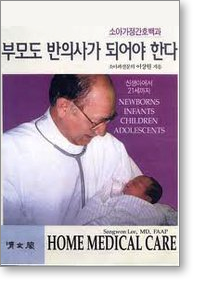
소아가정간호 백과- 부모도 반의사가 되어야 한다 제목 차례
여기에 있는 “소아가정 간호 백과– 부모도 반의사가 되어야 한다”의 차례는 일부이다.. Pediatric Home Nursing Encyclopedia – Parents must also become half-doctors.
Title Table of Contents
Here is a partial list of the “Pediatric and Family Nursing Encyclopedia: Parents must also be anti-doctors.”
더 자세한 차례는 각장에 훨씬 더 많이 있다. 모든 부모들이 꼭 권씩 보관해 두고 두고 참고하면 얼마나 좋을까.
제 1장 응급
혼수
화상
구법
납중독
화학 물질, 독극물, 약물 중독
화학 물질이나, 독극물 또는 약물이 피부에 묻었을 때
화학 물질에 의한 눈의 화상
찰과상
자상
절상
염좌
탈구
두골 골절
척추골골절
쇄골 골절
상완골 골절
손뼈와 손가락 뼈의 골절
대퇴골 골절
무릎관절이 다쳤을 때
정강이뼈 골절
아랫다리의 골절의 종류
발목과 발뼈의 골절
발가락뼈 골절
외출혈
여러종류의 지혈 방법
코피가 날 때
토혈
피똥을 눌 때
피가 소변에 나올 때
급성 복부질환
급성 탈수
설사, 구토로 인한 탈 수증
경구용 전해질
호흡곤란
고열이 날 때
열성 경련
콧구멍 속 이물
기도 속에 이물이 들어갔을 때
하이리크 처치법
이물이 소화기 속에 들어갔을 때
질식
생선가시가 목구멍 속에 걸렸을 때
소화기 속에 이물이 들어 갔을 때
질식사고
일산화탄소중독
연기를 흡입했을 때
물에 빠졌을 때
전기 감전
사람에게 물렸을 때
개에 물렸을 때
고양이에게 물리거나 할퀴었을 때
쥐에 물렸을 때
거미에 물렸을 때
독사에 물렸을 때
독이 없는 뱀에게 물렸을 때
지네에 물렸을 때
벌에 쏘였을 때
파리나 깍다귀에 물렸을 때
쐐기에 벌레, 나방, 모충에 의한 피부병
개미에 물렸을 때
벼룩 , 진드기. 빈대 등 곤충에 물렸을 때
모기에 물렸을 때
이가 갑자기 아플 때
빧진 이, 삔이 , 뿌러진 이
유아 급사
유아가 급사 즤전에 갔을 때
동상
피부에 물집이 잡혔을 때
단순기절
자살
인공호흡과 심장마사지
그림으로 보는 신생아나 영아의 심장 마사지
조갑주위염
손톱 밑에 피가 괼때
제 2장 예방
일반적인 예방
정기 건강 진찰
전염병과 예방접종
디프테리아, 백일해, 파상풍 예방접종
소아마비 예방접종
풍진 예방접종
볼거리 예방 접종
홍역 예방접종
B형 헤모필러스 인플루엔자 박테리아 의한 질병 예방접종
결핵 예방 접종
b형 감염 예방 접종
수두예방 접종
인플루엔자 예방 접종
특수 예방접종
감마 글로블린과 면역 글로블린
항생제나 설파제 등으로 예방하는 질병
안전사고예방
보행기 사고 예방
추락사고 예방
익사 사고 예방
화상사고 예방
일산화 탄소 중독 사고 예방
자전거 사고 예방
약물중독 사고 예방
화학약물질 중독 예방
휘발유, 등유 중독 예방
가솔린과 등유 중독 에방
살충제, 제초제 등 농약 중독사고 예방
납중독 예방
흡연 예방
유방암을 조기 진단하는 방법
제 3장 성장 발육
임신과 출산
월경과 배란
수정
태아의 성장 발육
아이들을 어떻게 사랑해 키울 것인가
태아의 성장과 발육
그림으로 보는 진통과 분만
귀저기
잠
울음
피부
생리적 황달
땀띠
목욕
아기를 스포지나 약솜 거지로 목욕시키는 방법
아기를 목용탕에서 목욕 시키는 방법
신생아 성장 발육
성장 발육
성장
발육
영양
양호
면역
아프가르 점수
신생이의 체온 재는 법
생후 29게일 부터 2개월 까지의 유아 (영아 )
2개월 부터 4개월까지의 유아
4개월 부터 6개월까지의 유아
6개월 부터 8개월까지의 유아
8개월 부터 9개월까지의 유아
9개월 부터 12개월까지의 유아
12개월 부터 15개월까지의 아이(유아)
15개월 부터 18개월까지의 아이\
18개월 부터 2세까지의 아이
만 2세 부터 만 3세까지의 아이
만 2세 부터 만 3세까지의 아이
만 3세 부터 만4세까지의 아이
만 4세 부터 만 5세까지의 아이\만 5세 부터 만 6세까지의 아이
만 6세 부터 만 7세까지의 아이
만 7세 부터 만 8세까지의 아이
만 8세 부터 만 9세까지의 아이
만 9세 부터 만 10세까지의 아이
만 10세 부터 만11세까지의 아이
만 11세 부터 만1 2세까지의 아이
만 12세 부터 만 20 세 청년이 될때 까지의 성장 발육
프로이드 심리 성욕 발달에 대한 학설
2개월에서 부터 4세까지 아이의 성장 발육표
Table of Contents
Below is a partial list of contents from the *Encyclopedia of Pediatric and Family Nursing: Why Parents Should Also Be Skeptical of Doctors*.
A much more detailed table of contents can be found within each individual chapter. It would be wonderful if every parent kept a copy on hand to refer to whenever needed. Chapter 1: Emergencies
Coma
Burns
Resuscitation Methods
Lead Poisoning
Poisoning by Chemicals, Toxins, or Drugs
Exposure of Skin to Chemicals, Toxins, or Drugs
Chemical Burns to the Eyes
Abrasions
Puncture Wounds
Lacerations
Sprains
Dislocations
Skull Fractures
Spinal Fractures
Clavicle (Collarbone) Fractures
Humerus (Upper Arm Bone) Fractures
Fractures of Hand and Finger Bones
Femur (Thigh Bone) Fractures
Knee Joint Injuries
Tibia/Fibula (Shin Bone) Fractures
Types of Lower Leg Fractures
Ankle and Foot Fractures
Toe Fractures
External Bleeding
Methods for Controlling Bleeding
Nosebleeds
Vomiting Blood (Hematemesis)
Blood in Stool
Blood in Urine
Acute Abdominal Conditions
Acute Dehydration
Dehydration Due to Diarrhea or Vomiting
Oral Rehydration Solutions (Electrolytes)
Difficulty Breathing (Dyspnea)
High Fever
Febrile Seizures
Foreign Objects in the Nasal Cavity
Foreign Objects in the Airway
Heimlich Maneuver
Foreign Objects in the Digestive Tract
Choking/Asphyxiation
Fish Bone Stuck in the Throat
Foreign Objects in the Digestive Tract
Suffocation/Asphyxiation Accidents
Carbon Monoxide Poisoning
Smoke Inhalation
Drowning
Electric Shock
Human Bites
Dog Bites
Cat Bites or Scratches
Rat Bites
Spider Bites
Venomous Snake Bites
Non-Venomous Snake Bites
Centipede Bites
Bee or Wasp Stings
Bites from Flies or Midges
Stinging Caterpillars (Larvae of Moths or Butterflies) Skin conditions caused by insects
Ant bites
Fleas, ticks Insect bites (including bed bugs)
Mosquito bites
Sudden toothache
Knocked-out, sprained, or broken teeth
Sudden infant death
Responding to a potential sudden infant death
Frostbite
Blisters on the skin
Simple fainting
Suicide
Artificial respiration and cardiopulmonary resuscitation (CPR)
Illustrated guide to CPR for newborns and infants
Paronychia (infection around the nail)
Blood pooling under a fingernail or toenail
Chapter 2: Prevention
General prevention
Routine health check-ups
Infectious diseases and vaccinations
Diphtheria, pertussis (whooping cough), and tetanus vaccination
Polio vaccination
Rubella vaccination
Mumps vaccination
Measles vaccination
Vaccination against diseases caused by *Haemophilus influenzae* type b (Hib)
Tuberculosis (TB) vaccination
Hepatitis B vaccination
Chickenpox (varicella) vaccination
Influenza (flu) vaccination
Specialized vaccinations
Gamma globulin and immune globulin
Prevention of diseases using antibiotics or sulfa drugs
Prevention of accidental injuries
Prevention of baby walker accidents
Prevention of falls
Prevention of drowning
Prevention of burns
Prevention of carbon monoxide poisoning
Prevention of bicycle accidents
Prevention of drug/medication poisoning
Prevention of chemical substance poisoning
Prevention of gasoline and kerosene poisoning
Prevention of pesticide (insecticide, herbicide, etc.) poisoning
Prevention of lead poisoning
Prevention of smoking
Methods for early diagnosis of breast cancer
Chapter 3: Growth Development
Pregnancy and Childbirth
Menstruation and Ovulation
Fertilization
Fetal Growth and Development
How to Raise Children with Love
Fetal Growth and Development
Labor and Delivery (Illustrated)
Diapers
Sleep
Crying
Skin
Physiological Jaundice
Heat Rash
Bathing
How to Bathe a Baby Using a Sponge, Cotton, or Gauze
How to Bathe a Baby in a Bathtub
Newborn Growth and Development
Growth and Development
Growth
Development
Nutrition
Health/Care
Immunity
Apgar Score
How to Take a Newborn’s Temperature
Infants: 29 Days to 2 Months Old
Infants: 2 to 4 Months Old
Infants: 4 to 6 Months Old
Infants: 6 to 8 Months Old
Infants: 8 to 9 Months Old
Infants: 9 to 12 Months Old
Children (Toddlers): 12 to 15 Months Old
Children: 15 to 18 Months Old
Children: 18 Months to 2 Years Old
Children: 2 to 3 Years Old
Children: 2 to 3 Years Old
Children: 3 to 4 Years Old
Children: 4 to 5 Years Old / Children: 5 to 6 Years Old
Children: 6 to 7 Years Old
Children: 7 to 8 Years Old
Children: 8 to 9 Years Old
Children: 9 to 10 Years Old
Children: 10 to 11 Years Old
Age… Children from age 11 to 12
Growth and development from age 12 up to age 20 (young adulthood)
Freud’s theory of psychosexual development
Growth and development chart for children from 2 months to 4 years of age
제 4장 모유
모유의 좋은 점 228
수유를 위한 준비 229
분만 후 아기에 젖을 먹이는 요령 232
아기에게 적당한 젖의 양 235
아기가 젖 먹고 싶어하는지 어떻게 아나
얼마나 자주 먹여야 하나
엄마의 젖이 아기에게 충분한지 알아보는 방법
아기에게 젖을 충분히 먹이려면
젖이 부족 하면
젖먹이는 엄마의 건강 관리
영양
젖꼭지가 아프거나 갈라질 때
젖유종이 생겼울 때
유방 마사지
영양
젖 먹이는 어마가 아플 때
젖을 짜는 방법과 짠 젖을 먹이는 방법
손 펌프로 젖을 짜야 할 경우
손으로 젖을 짜는 방법
젖 짜는 펌프로 젖을 짜는 방법
전기로 작동하는 젖짜는 펌프
젖을 멋일때 엄마의 자세
트림 시키기
한쪽 젖만 줄 것인가 또는 양쪽 젖을 다 줄 것인가
한 번에 몇분동안 주어야 하나
사람이 많이 모인 곳에서 젖을 줄 때
아기가 엄마의 젖꼭지를 물 때
젖먹는 아기의 건강
아가가 아플 때
모유와 신생아의 황달
모유와 알레르기
젖을 뗄 때
모유와 보조 영양
제5장 인공 영양, 이유식 , 비타민
인공영양…263
인공영양의 종류
인공영양을 먹이기 위한 준비
인공영양을 먹일 때
인공영양을 먹이는 횟수와 시간
인공영양과 물
하루에 필요한 칼로리
인공영양의 온도
인공영양과 비타민
모유, 우유, 양유, 인공영양 의 성분 비교표
우유병, 고무 젖꼭지, 뚜겅의 세척과 소독
농축연유, 우유병, 고무젖꼭지를 끓여 소독하는 방법
아기가 우유로 만든 인공영양을 먹을 수 없는 경우
이유식
이유식이란
이유식은 언제부터
이유식은 언제 부터
이유식을 주는 방법
이유식을 줄때 주의 할점
집에서 만든 이유식
비타민
비타민A
비타민B
비타민 C
비타민 D
비타민 E
비타민 K
비타민, 단백질, 무기질의 1일 필요량
비타민이 많이 들어 있는 음식물
하루이 필요로 하는 칼로리, 단백질, 물의 양
제 6장 신생아 질환
산류
두혈종
결막하 출혈
불균형 머리
소형
두피 무피부종
머리와 얼굴 등에 생기는 점상출혈
신생아 결막염
신생아 임질성 결막염
클라미디아 트라코마티스 결막염
화학물질성 결막염
코뼈 골절
조발생치
아구창
신생아의 식도, 위, 소장, 대장 등의 폐쇄증
선천성 소장 폐색증
쇄항증
선천성 식도 폐색증, 식도 기관 식도간 누관
의사에게 즉시 문의해야 할 신생아 증상
신생아 유방 비대
신생아 유방염(젖유종)
배꼽 염증(제염)
탯줄이나 배꼽에서 나는 출혈
제육아종
배꼽 레르니아
신생아 혈변
신생여아의 성기 출혈
선천성 근성 사경
신생아 탈수열
신생아기 이후 어린 아이들에게 생기는 탈수열
신생아 황달
신생아 생리적 황달
RH혈액형의 부적합으로 생기는 신생아황달
A, B, O 혈액형의 부적합으로 생기는신생아 황달
모유를 먹는 신생아에게 생기는 신생아황달
간염에 의한 신생아 황달
선천성 담도 폐색증 때문에 생기는 신생아 황달
다른 원인으로 생기는 신생아 황달
신생아 감염
신생아 감기
신생아 중이염
신생아 뇌막염과 패혈증
신생아 폐렴
신생아 흡입성 폐렴
태변 흡입성 폐렴
신생아 설사
전염성 설사
우유 단백질이 든 인공영양을 먹었을 때 하는 설사
선천성 유당분해효소 부족으로 생기는 설사
신생아 파상풍
두개강 내출혈
신생아 두골 골절
척주뼈 (등뼈) 골절
쇄골 골절
팔, 다리 뼈 골절
선천성 고관절 탈구, 고관절 이상 형성
후천성 고관절 탈구
선천성 고관절 탈구
신생아 안면신경 마비
상완신경총 마비
신생아 농가진(부스림)
중독성 홍반
비후성 유문협착증
신생아의 질식 ( 신생아 가사)
신생아의 저혈당증
신생아 테타니
신생아 풍진 증후군
신생아 빈혈
뇌성 마비
미숙아
미숙아에게 더 잘 생길 수 있는 병
딸꾹질
영아의 산통(3게월 콜리크)
신생아에 관해 알고 싶은 것
제 7장 전염병과 기생충 질환
A군 용혈성 연쇄상구균에 의한 전염병성홍열
성용열
성홍열과 비슷한 피부 발진이 나는 병들
포도상구균에 의한 전염병
종기
봉와염
식중독
포도상구균성 식중독
보들리즘
뇌막구균성 뇌막염과 패혈증
B 형 헤모필러스 인플루엔자균에 의 한 전염병
B 형 헤모필러스 인플루엔자균성 뇌막염
백일해
디프테리아
파상풍
장티푸스
파라티푸스 열, 식중독, 위장염
폐렴쌍구균성 전염병
이질
임질
매독
결핵
결핵 검사
투베르쿨린 검사
비시지 (B. C. G)
패혈증
라임병
묘조병
홍 역
풍진( 3일홍역)
수두와 대상포진
돌발성 발진(장미진)
천연두(마마)
소아마비(폴리오)
인플루엔자
가성콜레라(로타바이러스성 위장염)
볼거리
간염
전염성 간염(A형 간염)
혈청성 간염(B형 간염)
단순 포진 바이러스 감염
수족구병
바이러스성 놔염
에이즈( 후천성 면역 결핍 증후군)
광견병
마이코플라스 감염병
요충증
회충증
촌충증
십이지장충증
폐디스토마증
간디스토마증
람블 편모충증
섬모충증
개와 고양로부터 전염될 수 있는 구충증과 여러가지 병
유충 피부내 이행증
유충 체내 이행증
톡소플라즈마 병
가와사키병
비유행성 이하선염
Chapter 4: Breast Milk
Benefits of Breast Milk 228
Preparation for Breastfeeding 229
Tips for Nursing After Childbirth 232
Appropriate Amount of Milk for the Baby 235
How to Tell If Your Baby Wants to Feed
How Often Should You Feed?
How to Determine If Your Baby Is Getting Enough Milk
Ensuring Your Baby Gets Enough Milk
What to Do If Milk Supply Is Low
Health Care for Nursing Mothers
Nutrition
Dealing with Sore or Cracked Nipples
Dealing with Clogged Milk Ducts
Breast Massage
Nutrition
When a Nursing Mother Is Ill
How to Express and Feed Expressed Milk
When to Use a Manual Breast Pump
How to Express Milk by Hand
How to Use a Breast Pump
Electric Breast Pumps
Maternal Positioning During Breastfeeding
Burping the Baby
Nursing from One Breast or Both?
Duration of Each Feeding Session
Breastfeeding in Public
When a Baby Bites the Nipple
Health of a Breastfed Baby
When the Baby Is Ill
Breast Milk and Newborn Jaundice
Breast Milk and Allergies
Weaning
Breast Milk and Nutritional Supplements
Chapter 5: Formula Feeding, Solid Foods, and Vitamins
Formula Feeding…263
Types of Formula
Preparation for Formula Feeding
Feeding with Formula
Frequency and Timing of Formula Feedings
Formula and Water
Daily Caloric Requirements
Temperature of Formula
Formula and… Vitamins
Comparison table of components: breast milk, cow’s milk, goat’s milk, and infant formula
Cleaning and sterilization of baby bottles, rubber nipples, and caps
How to sterilize condensed milk, baby bottles, and rubber nipples by boiling
Situations where a baby cannot consume cow’s milk-based formula
Solid Foods (Weaning Foods)
What are solid foods?
When to start solid foods
When to start solid foods
How to feed solid foods
Precautions when feeding solid foods
Homemade solid foods
Vitamins
Vitamin A
Vitamin B
Vitamin C
Vitamin D
Vitamin E
Vitamin K
Daily requirements for vitamins, proteins, and minerals
Foods rich in vitamins
Daily requirements for calories, protein, and water
Chapter 6: Neonatal Disorders
Caput succedaneum
Cephalhematoma
Subconjunctival hemorrhage
Asymmetrical head (head shape irregularities)
Microcephaly
Aplasia cutis congenita (absence of skin on the scalp)
Petechiae (pinpoint hemorrhages) on the head and face
Neonatal conjunctivitis
Neonatal gonococcal conjunctivitis
Chlamydia trachomatis conjunctivitis
Chemical conjunctivitis
Nasal bone fracture
Natal teeth (teeth present at birth)
Thrush (oral candidiasis)
Atresia of the esophagus, stomach, small intestine, or large intestine in newborns
Congenital small bowel obstruction
Imperforate anus
Congenital esophageal atresia and tracheoesophageal fistula
Neonatal symptoms requiring immediate medical consultation
Neonatal breast enlargement
Neonatal mastitis
Umbilical inflammation (omphalitis)
Bleeding from the umbilical cord or navel
Umbilical granuloma
Umbilical hernia
Newborn (Neonate) Bloody stool
Genital bleeding in female newborns
Congenital muscular torticollis
Dehydration fever in newborns
Dehydration fever in infants beyond the neonatal period
Neonatal jaundice
Physiological neonatal jaundice
Neonatal jaundice due to Rh blood type incompatibility
Neonatal jaundice due to ABO blood type incompatibility
Breastfeeding-associated neonatal jaundice
Neonatal jaundice caused by hepatitis
Neonatal jaundice due to congenital biliary atresia
Neonatal jaundice from other causes
Neonatal infections
Common cold in newborns
Otitis media (middle ear infection) in newborns
Neonatal meningitis and sepsis
Neonatal pneumonia
Neonatal aspiration pneumonia
Meconium aspiration pneumonia
Neonatal diarrhea
Infectious diarrhea
Diarrhea caused by formula containing milk protein
Diarrhea due to congenital lactase deficiency
Neonatal tetanus
Intracranial hemorrhage
Skull fracture in newborns
Vertebral (spinal) fracture
Clavicular (collarbone) fracture
Fractures of the arms or legs
Congenital hip dislocation / Hip dysplasia
Acquired hip dislocation
Congenital hip dislocation
Neonatal facial nerve palsy
Brachial plexus palsy
Neonatal impetigo
Erythema toxicum
Hypertrophic pyloric stenosis
Neonatal asphyxia
Neonatal hypoglycemia
Neonatal tetany
Congenital rubella syndrome
Neonatal anemia
Cerebral palsy Paralysis
Premature infant
Conditions more common in premature infants
Hiccups
Infant colic (3-month colic)
Things to know about newborns
Chapter 7: Infectious and Parasitic Diseases
Scarlet fever (caused by Group A hemolytic streptococci)
Scarlet fever
Diseases presenting with skin rashes similar to scarlet fever
Staphylococcal infections
Boils (furuncles)
Cellulitis
Food poisoning
Staphylococcal food poisoning
Botulism
Meningococcal meningitis and sepsis
Infections caused by *Haemophilus influenzae* type b (Hib)
*Haemophilus influenzae* type b meningitis
Pertussis (whooping cough)
Diphtheria
Tetanus
Typhoid fever
Paratyphoid fever, food poisoning, and gastroenteritis
Pneumococcal infections
Dysentery (shigellosis)
Gonorrhea
Syphilis
Tuberculosis (TB)
Tuberculosis testing
Tuberculin test
BCG (Bacille Calmette-Guérin) vaccine
Sepsis
Lyme disease
Cat-scratch disease
Measles
Rubella (German measles)
Chickenpox and shingles (herpes zoster)
Exanthem subitum (roseola infantum)
Smallpox
Poliomyelitis (polio)
Influenza
“Pseudo-cholera” (rotavirus gastroenteritis)
Mumps
Hepatitis
Infectious hepatitis (Hepatitis A)
Serum hepatitis (Hepatitis B)
Herpes simplex virus infection
Hand, foot, and mouth disease
Viral encephalitis
AIDS (Acquired Immunodeficiency Syndrome)
Rabies
Mycoplasma Infectious diseases
Enterobiasis (pinworm infection)
Ascariasis (roundworm infection)
Taeniasis (tapeworm infection)
Ancylostomiasis (hookworm infection)
Paragonimiasis (lung fluke infection)
Clonorchiasis (liver fluke infection)
Giardiasis
Ciliophoriasis (ciliate infection)
Hookworm infections and various other diseases transmissible from dogs and cats
Cutaneous larva migrans
Visceral larva migrans
Toxoplasmosis
Kawasaki disease
Sporadic mumps
제 8장 호흡기 질환
감기
급성 인두염 \
바이러스성 급성 인두염
박테리아성 인두염
급성편도선염
만성편도선염
편도선 주위 농양
인두후부 농양
급성후두염(급성 크루프)
바이러스성 급성 후두염
급성 후두, 기관 기관지염으로 인한 크루프
급성 경련성 후두염
급성 후두개염으로 인해 생기는 크루프
급성 기관지염
만성기관지염
폐렴
바이러스성 폐렴
급성 세기관지염
폐렴쌍구균성 폐렴
포도상구균성 폐렴
마아코플라스마 폐렴
흡입성 폐렴
신생아에게 생기는 폐렴
늑막염과 농흉
기흉
기관지확장증
제 9장 소화기 질환
정상 대변
태변
모유를 먹는 아기의 대변
인공영양을 먹는 아기의 대변
이상 대변
기아변
점액변
푸른 대변
검은 대변
혈변
설사
생후 28일까지 신생아 설사
신생기 이후 유아들이나 돌 이후의 아이들의 설사
우유 단백 알레르기성 질환으로 생기는 설사
바이러스나 박테리아가 위장에 직접 전염되어 위장염을 일으킬 때 생기는 설사
설사 및 구토의 일 반적인 치료
로타 바이러스로 인한 위장염
경구용 전해질 용액으로 구토와 설사 치료해 줄 때
모유나 인공여양을 넘길 때
구토
심리적 요인으로 인한 구토
주기성 구토 증후군
반추증
피를 토할 때
갓 태어난 아기가 피를 토하는 경우
갓 태어난 이후 신생아나 아이가 피를 토하는 경우
변비증
유아의 변비증
돌 이후 아이들의 변비증
선천성 거대결장
복통
신생아들과 돌 이전 유아들의 복통
돌 이후 유아들에게 생기는 복통
학동기 부터 사춘기 아이들에게 생기는 복통
입병
입안의 외상
헬퍼스성 치은 구강염
아프타스 궤양
지도상 설
짧은 혀
언청이와 구개파열
충수염
비장 파열
비장이 없는 아이
치열
흥분성 위장관증후군
치질
장중첩증
서혜부탈장
유분증
제 10장 비뇨 생식기 질환
혈뇨
농뇨
단배뇨
요로감염
소변검사
급성 사구체 신염
A군 베타 용혈성 연쇄상 구균에 의한 급성사구체염
A군 베타 용혈성 연쇄상 구균 이외 다른 원인으로 생기는 급성사구체염
신 증후군
여아의 외음부염, 외음부질염, 질염
사춘기 여아들의 외음부 질염
트리코모나스 외음부 질염
모닐리아 외음부질염
임질균성 외음부질염
비특이성 백테리아 성 외음부 질염
클라미디아 트리코마티스 질염
헐퍼스 바이러성 질염
첨규 습우
잠재고환
포경과 포경수술
음낭 수종
요도하열
처녀막
소음순 유착
신장이 하나만 있는 경우
이중 요관
신장 전위
요석증
야뇨증
월름씨 종양
고환염
제 11장 심장 질환
선천성 심장기형
태아의 혈액 순환도
순환기
심실중격 결손증
심방중격 결손증
동맥관 개존
대동맥 축착
대동맥 협착
폐동맥 협착
활로 사증
삼첨판 폐쇄
대혈관 전위
정상 맥박수
선천성 심장기형이 있을 때 주의 할 사항
빈맥
서맥
부정맥
동성 부정맥
기외수축 부종맥
발작성 빈맥
방실 차단성 부정맥
전염성 심장내막염
전염성 심(장)내막염의 예방
류머티성 열
류머티성 심장염
류머티성 관절염
류머티성 피하결절
류머티성 유연성 홍반
무도증
류머티성 폐렴
심근염
바이러스 심근염
심낭염
정상혈압과 고혈압
평균 혈압
혈압 측정시 유의 할 점
심잡음
아이들의 평균 혈압
제 12장 신경 정신 질환
간 질
대발작
소발작
정신운동 발작
무동 발작
근간대성 발작
점두 경련
간질을 가진 아이가 사춘기가 될 때
간질하는 아이들의 부모들이 많이 하는 질문
최근 흔히 쓰는 간질 약들
간질과 비슷한 병들
나르콜렢시 (수면발작)
호흡정지 발작
히스테리아
단순기절
열성 경련
간질이 있는 아이나 부모가 평소 주의 할 사항들
열성 경련의 예후
뇌 종양
수두증 (뇌수종)
두 통
두개강 질병 이외의 신체 다른 부위에 생긴 질병에 의한 두통
급성 재발성 두통(편두통)
만성 진행성 두통
만성 비 진행성 두통
두부외상
경한 두부외상
심한 두부외상
안면 신경 마비
양성 급성 현기증
손가락 빨기
이미증
교조증(손톱을 물어 뜯는 버릇)
머리를 부딪치는 버릇
몸을 흔드는 버릇
분노발작
모발 발거증
틱증 (경련성 불수의 운동)
단순 틱증
운동성 만성 틱증
몽유병
아이가 쉽게 잠 들지 않거나 자주 깰 때
말더듬
수 음
우울증
공포감
학교공포증
행동 과다증 및 집중력 결여증
다운 증후군
다운증후군과 부모의 염색체
소아자폐증
지능 지수와 영재
Chapter 8: Respiratory Diseases
Common Cold
Acute Pharyngitis
Viral Acute Pharyngitis
Bacterial Pharyngitis
Acute Tonsillitis
Chronic Tonsillitis
Peritonsillar Abscess
Retropharyngeal Abscess
Acute Laryngitis (Acute Croup)
Viral Acute Laryngitis
Croup due to Acute Laryngotracheobronchitis
Acute Spasmodic Laryngitis
Croup due to Acute Epiglottitis
Acute Bronchitis
Chronic Bronchitis
Pneumonia
Viral Pneumonia
Acute Bronchiolitis
Pneumococcal Pneumonia
Staphylococcal Pneumonia
Mycoplasma Pneumonia
Aspiration Pneumonia
Neonatal Pneumonia
Pleurisy and Empyema
Pneumothorax
Bronchiectasis
Chapter 9: Digestive System Diseases
Normal Stool
Meconium
Stool of Breastfed Infants
Stool of Formula-fed Infants
Abnormal Stool
Starvation Stool
Mucus-containing Stool
Green Stool
Black Stool
Bloody Stool
Diarrhea
Diarrhea in Neonates (up to 28 days old)
Diarrhea in Infants (beyond the neonatal period) and Children Over One Year Old
Diarrhea due to Milk Protein Allergy
Diarrhea caused by Viral or Bacterial Gastrointestinal Infections (Gastroenteritis)
General Management of Diarrhea and Vomiting
Gastroenteritis caused by Rotavirus
Treating Vomiting and Diarrhea with Oral Electrolyte Solutions
Transitioning Between Breast Milk and Formula
Vomiting
Vomiting due to Psychological Factors
Cyclic Vomiting Syndrome
Rumination
Vomiting blood (Hematemesis)
Vomiting blood in newborns
Vomiting blood in infants and children
Constipation
Constipation in infants
Constipation in children over one year of age
Congenital megacolon (Hirschsprung’s disease)
Abdominal pain
Abdominal pain in newborns and infants under one year of age
Abdominal pain in children over one year of age
Abdominal pain in school-aged children and adolescents
Mouth sores/lesions
Trauma to the mouth
Herpetic gingivostomatitis
Aphthous ulcers
Geographic tongue
Ankyloglossia (tongue-tie)
Cleft lip and cleft palate
Appendicitis
Splenic rupture
Asplenia (absence of the spleen)
Anal fissures
Irritable bowel syndrome (IBS)
Hemorrhoids
Intussusception
Inguinal hernia
Encopresis
Chapter 10: Genitourinary Disorders
Hematuria (blood in urine)
Pyuria (pus in urine)
Proteinuria (protein in urine)
Urinary tract infection (UTI)
Urinalysis
Acute glomerulonephritis
Acute glomerulonephritis caused by Group A beta-hemolytic streptococcus
Acute glomerulonephritis caused by factors other than Group A beta-hemolytic streptococcus
Nephrotic syndrome
Vulvitis, vulvovaginitis, and vaginitis in girls
Vulvovaginitis in adolescent girls
Trichomonas vulvovaginitis
Monilial (yeast) vulvovaginitis
Gonococcal vulvovaginitis
Nonspecific bacterial vulvovaginitis
Chlamydia trachomatis vaginitis
Herpetic vaginitis
Condyloma acuminatum (genital warts)
Cryptorchidism (undescended testicle)
Phimosis and circumcision
Scrotum Hydronephrosis
Hypospadias
Hymen
Labial adhesions
Solitary kidney (having only one kidney)
Duplicated ureter
Renal ectopia (displaced kidney)
Urolithiasis (urinary stones)
Enuresis (bedwetting)
Wilms’ tumor
Orchitis
Chapter 11: Heart Diseases
Congenital heart defects
Fetal blood circulation
Circulatory system
Ventricular septal defect (VSD)
Atrial septal defect (ASD)
Patent ductus arteriosus (PDA)
Coarctation of the aorta
Aortic stenosis
Pulmonary stenosis
Tetralogy of Fallot
Tricuspid atresia
Transposition of the great arteries
Normal heart rate
Precautions for children with congenital heart defects
Tachycardia
Bradycardia
Arrhythmia
Sinus arrhythmia
Extrasystole (premature beats)
Paroxysmal tachycardia
Atrioventricular (AV) block
Infective endocarditis
Prevention of infective endocarditis
Rheumatic fever
Rheumatic carditis
Rheumatic arthritis
Rheumatic subcutaneous nodules
Erythema marginatum
Chorea
Rheumatic pneumonia
Myocarditis
Viral myocarditis
Pericarditis
Normal blood pressure and hypertension
Mean arterial pressure
Points to consider when measuring blood pressure
Heart murmurs
Average blood pressure in children
Chapter 12: Neurological and Psychiatric Disorders
Epilepsy
Grand mal seizure (tonic-clonic seizure)
Petit mal seizure (absence seizure)
Psychomotor seizure
Atonic seizure (akinetic seizure)
Myoclonic seizure
Infantile spasms
Epilepsy in children reaching puberty
Common questions from parents of children with epilepsy
Commonly used antiepileptic drugs
Conditions that mimic epilepsy
Narcolepsy
Breath-holding spells Seizures
Hysteria
Simple fainting (syncope)
Febrile convulsions
Precautions for children with epilepsy and their parents
Prognosis of febrile convulsions
Brain tumors
Hydrocephalus
Headaches
Headaches caused by conditions outside the cranial cavity
Acute recurrent headaches (migraines)
Chronic progressive headaches
Chronic non-progressive headaches
Head trauma
Mild head trauma
Severe head trauma
Facial nerve paralysis
Benign acute vertigo
Thumb-sucking
Pica
Onychophagia (nail-biting)
Head-banging
Body-rocking
Temper tantrums
Trichotillomania (hair-pulling)
Tic disorders (involuntary spasmodic movements)
Simple tic disorder
Chronic motor tic disorder
Sleepwalking (somnambulism)
Difficulty falling asleep or frequent nighttime awakenings in children
Stuttering
Masturbation
Depression
Anxiety/Fear
School phobia
Attention-Deficit/Hyperactivity Disorder (ADHD)
Down syndrome
Down syndrome and parental chromosomes
Childhood autism
Intelligence Quotient (IQ) and giftedness
제 13장 혈액과 임파 질환
혈액과 혈량
적혈구
백혈구
혈소판
임프액과 임파선
피검사
빈 혈
철분 부족으로 생기는 빈혈
용혈성 빈혈
재생불능성 빈혈
급성 출혈에 의한 빈혈
만성 출혈로 생긴 빈혈
특발성 혈소판 감소성 자반증
백혈구 질환
약물로 인한 백혈구 감소증
급성 백혈병
혈우병
혈우병이 유전 하는 가계수
혈우병이 있는 아이가 주의 해야 할 사항
폰 윌리브란드병
용혈 요독 증후군
목의 임파선(절) 비대와 임파선염
제 14장 내분비선 질환
성조숙증
순유방 조기 발육증
순성모 조기발육증
완전 성조숙증
사춘기가 아이들의 2차 성징
사춘기가 늦은 아이들
남아의 유방 조기발육증
키가 작은 아이
선천성 갑상선 기능 저하증
후천성 갑상선 기능 저하증
갑상선 기능 항진증
갑상선 비대증
임파구성 갑상선염
갑상선 암
갑상선 설관 낭종
터너 증후군
당뇨병
당뇨병 환자가 음식물을 섭취할 때 유의 점
인슐린 주사놓는 법
소변에서 당을 검사하는 벙법
테스트 시약 등을 보관하는 방법
월경 곤란
월경 불순
초경이 늦을 때
비만증
체형
음식을 잘 먹지 않는 아이
성장 중지증
성장챠트와 백분위 수
제 15장 알레르기
알레르기
알레르기 질환을 일으키는 항원
약물 알레르기성 질환과 약물 부작용
약물 알레르기성 질환
약물로 인항 아나필락시스
혈청병
약물 알레르기성 질환과 약물 부작용을 구별하기 힘든 경우
약물 부작용
알레르기성 비염
면역요법
벌 알레르기
음식물 알레르기(음식물 알레르성 질환)
우유 단백질 알레르기성 질환의 진단
기관지 천식
기관지 천식 발작의 유발 인자
운동 유발성 기관지 천식 발작되지 않게 예방 하는 법
기관지 천식 약
페니실린 알레르기
헤노흐- 쇤 라인 자반증
연소성 류마티스양 관절염
습진
알레르성 결막염
접촉성 피부염 및 옻나무에 접촉해서 생긴 피부병
지루성 피부염
두더러기( 담마진)
제 16장 정형외과 질환
편평족
아이들의 신발
O형 다리와 X형 다리
O형 다리의 예
X형 다리의 예
모지 내반
모지외반
선천성 내반마족
선천성 고관절 탈구
척주 측만곡증
척주 후만증
골수염
급성 관절염
결핵성 척추염
결핵성 관절염
일과성 활막염
탈구
요골 두부 부전탈구
퍼세스병
성장통
절면서 걸을 때
류머티성 관절염
오스굿 – 슬래터 병
손가락, 발가락의 다지증 – 합지증
지조 내생
누두흉
제 17장 피부과 질환
습진 (아토피성 피부염)
지루성 피부염
기저귀 피부염
땀 띠
항문 주위 피부염
접촉성 피부염
두드러기 (담마진)
구진성 두드러기
곤충 자상
진드기에 물렸울 떼
이에 물렸울 때
옴
탈모증
기계총. 두부백선
도장 부스럼 (체부백선)
사마귀
티 눈
농가진( 부스럼)
대상포진
혈관성 모반 (혈관종)
포도주색 모반
딸기양 모반
해면상 혈관종
색소성 모반
여드름
무 좀(발의 백선)
장미색 피강진
전염성 홍반
Chapter 13: Blood and Lymphatic Disorders
Blood and Blood Volume
Red Blood Cells (Erythrocytes)
White Blood Cells (Leukocytes)
Platelets (Thrombocytes)
Lymph and Lymph Nodes
Blood Tests
Anemia
Iron-Deficiency Anemia
Hemolytic Anemia
Aplastic Anemia
Anemia Due to Acute Hemorrhage
Anemia Due to Chronic Hemorrhage
Idiopathic Thrombocytopenic Purpura (ITP)
White Blood Cell Disorders
Drug-Induced Leukopenia
Acute Leukemia
Hemophilia
Inheritance Patterns of Hemophilia
Precautions for Children with Hemophilia
Von Willebrand Disease
Hemolytic Uremic Syndrome (HUS)
Enlarged Lymph Nodes in the Neck (Lymphadenopathy) and Lymphadenitis
Chapter 14: Endocrine Disorders
Precocious Puberty
Premature Thelarche (Early Breast Development)
Premature Pubarche (Early Development of Pubic Hair)
True (Complete) Precocious Puberty
Secondary Sexual Characteristics During Puberty
Delayed Puberty
Premature Breast Development in Boys
Short Stature
Congenital Hypothyroidism
Acquired Hypothyroidism
Hyperthyroidism
Thyroid Enlargement (Goiter)
Lymphocytic Thyroiditis
Thyroid Cancer
Thyroglossal Duct Cyst
Turner Syndrome
Diabetes Mellitus
Dietary Considerations for Patients with Diabetes
How to Administer Insulin Injections
How to Test for Glucose in Urine
Storage of Testing Reagents and Supplies
Dysmenorrhea (Painful Menstruation)
Menstrual Irregularities
Delayed Menarche (Late Onset of Menstruation)
Obesity
Body Habitus (Body Type)
Poor Appetite (Picky Eating)
Growth Arrest
Growth Charts and Percentiles
Chapter 15 Allergies
Allergies
Antigens that trigger allergic diseases
Drug-induced allergic diseases vs. adverse drug reactions
Drug-induced allergic diseases
Drug-induced anaphylaxis
Serum sickness
Cases where it is difficult to distinguish between drug-induced allergic diseases and adverse drug reactions
Adverse drug reactions
Allergic rhinitis
Immunotherapy
Bee venom allergy
Food allergies (food-related allergic diseases)
Diagnosis of milk protein allergies
Bronchial asthma
Triggers for bronchial asthma attacks
Prevention of exercise-induced asthma attacks
Medications for bronchial asthma
Penicillin allergy
Henoch-Schönlein purpura
Juvenile rheumatoid arthritis
Eczema
Allergic conjunctivitis
Contact dermatitis (including dermatitis caused by contact with lacquer trees/poison ivy)
Seborrheic dermatitis
Urticaria (hives)
Chapter 16: Orthopedic Conditions
Flat feet (pes planus)
Children’s footwear
Bow legs (genu varum) and knock-knees (genu valgum)
Examples of bow legs
Examples of knock-knees
Hallux varus
Hallux valgus
Congenital clubfoot (talipes equinovarus)
Congenital hip dislocation
Scoliosis
Kyphosis
Osteomyelitis
Acute arthritis
Tuberculous spondylitis (Pott’s disease)
Tuberculous arthritis
Transient synovitis
Dislocation
Subluxation of the radial head (nursemaid’s elbow)
Legg-Calvé-Perthes disease
Growing pains
Limping (gait abnormalities)
Rheumatic conditions Arthritis
Osgood-Schlatter disease
Polydactyly and syndactyly (of fingers or toes)
Ingrown nail (onychocryptosis)
Pectus excavatum (funnel chest)
Chapter 17: Dermatological Conditions
Eczema (atopic dermatitis)
Seborrheic dermatitis
Diaper dermatitis
Heat rash (miliaria)
Perianal dermatitis
Contact dermatitis
Urticaria (hives)
Papular urticaria
Insect bites
Tick bites
Lice infestations
Scabies
Alopecia (hair loss)
Tinea capitis (ringworm of the scalp)
Tinea corporis (ringworm of the body)
Warts
Corns
Impetigo
Herpes zoster (shingles)
Vascular nevi (hemangiomas)
Port-wine stain
Strawberry hemangioma
Cavernous hemangioma
Pigmented nevi (moles)
Acne
Athlete’s foot (tinea pedis)
Pityriasis rosea
Erythema infectiosum (fifth disease)