진드기에 물렸을 때와 감염병
Tick bites and Infectious disease
For more information, please visit drleepediatrics.com. search 정보를 더 찾으려면 drleepediatrics.com 방문한후 search 에서 찾아보세요.
● 진드기는 한국 및 미국을 비롯해 세계 각국 각처에서 사는 벌레의 일종이다.
● 진드기는 풀밭, 산 나무, 잔디, 짐승 등에서 발견되며 그 종류와 크기도 여러 가지이다.
● 진드기에 물리면 물린 국소가 가렵고 붓고 진물이 나면서 붉은 발진이 국소적으로 생길 수 있고, 다음과 같은 병에 걸릴 수 있다.
● 진드기에 물려 생기는 박테리아 감염병.
● 진드기에 물린 후 보렐리아 부르그도르페리(Borrelia burgdorferi)균에 감염되면 라임 병(P.000 참조),
● 리켓치아 리켓치(Rickettsia rickettsii)세균에 감염되면 로키산 홍반열(P.000 참조),
● 에를리히 리켓치(Ehrlichia chaffeensis)이란 세균에 감염되면 사람 백혈구성 에를리히아증,
● 진드기에 물린 후 신체 마비,
● 출혈성 질환,
● 야토병,
● 뇌염,
● 재귀열(P.000 참조),
● 바베시아증,
● 쯔쯔가무시병(P.000 참조) 등에 걸릴 수 있다.
● 사슴 진드기(Deer tick)에 물리면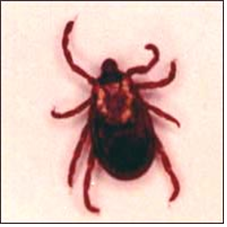
▴ 그림 389. 진드기
사슴 진드기의 크기는 교과서페리오드 크기만 하다.
Copyright ⓒ 2012 John Sangwon Lee, MD, FAAP
▴ 사진395. 라임 병으로 생긴 유주성 홍반.
Copyright ⓒ 2012 John Sangwon Lee, MD, FAAP
● 라임 병이나
● 사람 백혈구성 에를리히아증,
● 바베시아증에 걸릴 수 있다.
■ 출처 및 참조 문헌
● 벼룩, 진드기, 빈대 등에 물렸을 때(P.000 참조) 참조.
● 파리나 각다귀에 물렸을 때(P.000 참조),
● 쐐기벌레, 나방, 모충에 의한 피부병(P.000 참조),
● 개미에 물렸을 때(P.000 참조),
● 모기에 물렸을 때와 불개미에 쏘일 때 참조(P.000 참조).
● 벌에 쏘였을 때(P.000 참조),
● 벌 알레르기(P.000 참조) 참조.
● 진드기는 발이 여덟 개 달려있는 절족 곤충이다.
● 보통 진드기는 주둥이를 사람 피부층에 박고 배가 터질 정도로 한자리에서 피를 빨아먹는 습성이 있다.
● 피를 조금 빨아 먹은 보통 진드기의 배는 약간 부르지만, 피를 오랫동안 빤 진드기의 배는 탱탱하고 적갈색이다.
● 드물게는 진드기에 물린 후 전신에 두드러기도 날 수 있다.
■ 진드기에 물렸을 때의 치료
● 피부층에 꼭 박힌 진드기의 주둥이를 족집게로 잡아 빼야 한다.
● 이 때 피부층에 박힌 진드기의 머리와 주둥이가 피부층에서 전부 빠져 나올 수도 있고, 피부층에 박았던 주둥이의 일부 또는 전부가 빠져 나올 수도 있고 피부층 일부와 주둥이가 같이 떨어져 나올 수도 있다.
● 때로는 피부층에 박힌 진드기의 주둥이가 피부층 속에 그대로 남아 있을 수도 있고 진드기의 체부만 떨어져 나올 수도 있다.
● 진드기의 주둥이가 피부층 속에 박혀 남아 있을 때는 주둥이를 족집게로 빼낼 수 있는 대로 빼내고 베타다인 살균액([부모도 반의사가 되어야 한다-소아가정간호 백과]-제 21권 소아청소년 가정 간호 참조) 등으로 그 부위를 살균 치료한다.
● 그 후 며칠 지나면 피부층 속에 남았던 주둥이는 자연히 빠져 나온다.
● 때로는 주둥이가 남아 있는 피부에 세균 감염이 생겨 곪을 수 있다.
● 사슴 진드기에 물렸을 때에는 라임 병 등이 발생되는지 관찰한다. p.00라임 병 참조.
● 라임 병은 Amoxicillin이나 Doxycycline 등 항생제로 치료하고
● 바베시아증(Babesia)은 Clindamycin + Quinine 또는 Atovaquone과 Azithromycin 등의 항생제로 치료할 수 있다.
▴ 사진 391. 라임 병으로 등에 난 유주성 홍반.
Copyright ⓒ 2012 John Sangwon Lee, MD, FAAP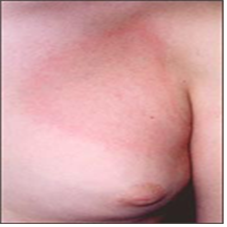
그림 79. 라임 병으로 왼쪽 앞가슴에 난 만성 유주성 홍반.
Copyrightⓒ 2012 John Sangwon Lee,MD.FAAP
■ 진드기에 물리지 않게 예방하고 라임 병 예방
● 소아청소년들이 개와 같이 놀거나 들이나 산에 갔다 집으로 돌아왔을 때, 피부에 진드기가 붙어있는지 조사해야 한다.
● 들이나 산에 갈 때는 곤충 등이 덤벼들지 않도록 방충할 수 있는 DEET 등 퇴치제제를 옷에 뿌리는 방법도 있다.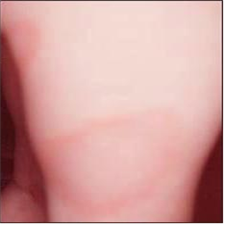
▴ 사진 392. 라임 병으로 유주성 홍반이 바른 쪽 다리에 나 있다.
Copyright ⓒ 2012 John Sangwon Lee, MD, FAAP
▴ 사진 393. 라임 병으로 생긴 유주성 홍반.
Copyright ⓒ 2012 John Sangwon Lee, MD, FAAP
● 진드기 주둥이가 피부층에 박혀 있을 때는 클로로폼, 에텔, 알코올, 질소액, 또는 방열 등으로 뺄 수 있다.
● 피부층에 깊이 박힌 진드기의 주둥이를 이런 처치로 빼려고 해도 깊이 박힌 주둥이가 쉽게 빠져 나오지 않는 것이 보통이다.
● 피부층에 박혀 있는 진드기의 주둥이로 진드기 알레르기가 생길 수 있고 두드러기가 날 수 있다. 이런 때는 진드기 주둥이를 수술로 빼야 한다.
● 보통 진드기에 물려 마비 증상 징후가 생길 때는 피부층 속에 박혀 있는 진드기의 주둥이를 수술로 제거 한다.
● 사슴 진드기에 물려 라임 병이 발병하기 이전, 라임 병 예방 목적으로 항생제 사용에 관해 논쟁거리이다.
● 단순히 라임 병을 예방하기 위해 항생제를 사용 하지 않는다. 그러나 단골 청소년과 의사에게 문의 결정 한다.
Tick Bites and Infectious Diseases
For more information, please visit drleepediatrics.com. Search
For more information, please visit drleepediatrics.com and search.
● Ticks are a type of insect that live in many parts of the world, including Korea and the United States.
● Ticks are found in grasslands, trees, lawns, and animals, and come in many different types and sizes.
● Tick bites can cause itching, swelling, and a localized red rash with oozing fluid. They can also lead to the following diseases:
● Bacterial infections caused by tick bites.
● Tick bites can cause Lyme disease (see page 000) if infected with Borrelia burgdorferi,
● Rocky Mountain spotted fever (see page 000) if infected with Rickettsia rickettsii,
● human leukocytic ehrlichiosis (see page 000) if infected with Ehrlichia chaffeensis,
● paralysis,
● hemorrhagic diseases,
● tularemia,
● encephalitis,
● relapsing fever (see page 000),
● babesiosis,
● tsutsugamushi disease (see page 000), etc.
● Deer tick bites can cause:
▴ Figure 389. Ticks
Deer ticks are about the size of a textbook periodont.
Copyright ⓒ 2012 John Sangwon Lee, MD, FAAP
▴ Photo 395. Erythema migrans caused by Lyme disease.
Copyright ⓒ 2012 John Sangwon Lee, MD, FAAP
● Lyme disease,
● human leukocytic ehrlichiosis,
● babesiosis.
■ Sources and References
● See Flea, Tick, and Bedbug Bites (see P.000).
● See Fly and Gnats Bites (see P.000).
● See Caterpillar, Moth, and Bedbug Skin Infections (see P.000).
● See Ant Bites (see P.000).
● See Mosquito Bites and Fire Ant Stings (see P.000).
● Bee stings (see page 000),
● Bee allergies (see page 000).
● Ticks are arthropod insects with eight legs.
● Ticks typically burrow their proboscis into the skin and suck blood in one spot, often to the point of bursting open.
● Ticks that have only sucked a small amount of blood have a slightly swollen abdomen, but those that have sucked blood for a long time have a plump, reddish-brown abdomen.
● In rare cases, a tick bite can cause hives all over the body.
■ Treatment for Tick Bites
● Use tweezers to remove the tick’s proboscis, which is firmly embedded in the skin.
● The head and proboscis of the tick may be completely removed, part or all of the proboscis may be removed, or the skin and proboscis may be removed together.
● Sometimes, the tick’s proboscis may remain embedded in the skin, or only the tick’s body may detach.
● If the tick’s proboscis remains embedded in the skin, remove it as much as possible with tweezers and sterilize the area with a betadine antiseptic solution (see [Parents Should Become Half-Doctors Too – Encyclopedia of Pediatric Home Nursing], Vol. 21, Pediatric and Adolescent Home Nursing).
● After a few days, the proboscis remaining in the skin will naturally fall out.
● Sometimes, the skin where the proboscis remains can become infected and fester.
● If bitten by a deer tick, monitor for symptoms such as Lyme disease. See Lyme Disease, p. 00.
● Lyme disease is treated with antibiotics such as Amoxicillin or Doxycycline.
● Babesiosis can be treated with antibiotics such as Clindamycin + Quinine or Atovaquone and Azithromycin.
▴ Photo 391. Erythema migrans on the back due to Lyme disease.
Copyright ⓒ 2012 John Sangwon Lee, MD, FAAP
Figure 79. Chronic erythema migrans on the left anterior chest due to Lyme disease.
Copyright ⓒ 2012 John Sangwon Lee, MD, FAAP
■ Preventing Tick Bites and Lyme Disease
● When children and adolescents return home from playing with dogs or going out in the fields or mountains, check their skin for ticks.
● When going out in the fields or mountains, you can also spray insect repellents such as DEET on your clothing to prevent insect bites.
▴ Photo 392. Lyme disease-related erythema migrans on the right leg.
Copyright ⓒ 2012 John Sangwon Lee, MD, FAAP
▴ Photo 393. Lyme disease-related erythema migrans.
Copyright ⓒ 2012 John Sangwon Lee, MD, FAAP
● If a tick’s proboscis is embedded in the skin, it can be removed using chloroform, ether, alcohol, nitrogen gas, or heat.
● Even if a tick’s proboscis is deeply embedded in the skin, it is usually difficult to remove with these methods.
● A tick’s proboscis embedded in the skin can cause tick allergies and hives. In these cases, the tick’s proboscis must be surgically removed.
● Typically, when a tick bite causes signs of paralysis, the tick’s proboscis embedded in the skin is surgically removed.
● There is controversy over the use of antibiotics to prevent Lyme disease before a deer tick bite can cause Lyme disease.
● Do not use antibiotics simply to prevent Lyme disease. However, consult your child’s physician for advice.
Copyright drleepediatrics.com 2.202026