편평족(편평발/평발)
Flatfoot
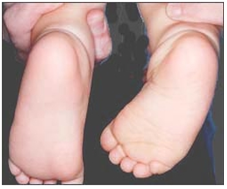
사진 설명을 입력하세요.
▴ 사진 76. 대부분의 영유아들의 발바닥은 정상적으로 편평하다. 평발이 있는 것 같이 보이지만 점점 더 성장하면서 발바닥 아치가 점차로 뚜렷하게 나타나는 것이 정상이다. Copyright ⓒ 2011 John Sangwon Lee, M.D. FAAP
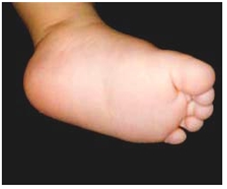
사진 설명을 입력하세요.
▴ 사진 77. 대부분의 영유아들의 발은 평발같이 보이지만 성장하면서 아치가 점차로 뚜렷하게 나타나는 것이 정상이다. Copyright ⓒ 2011 John Sangwon Lee, M.D. FAAP
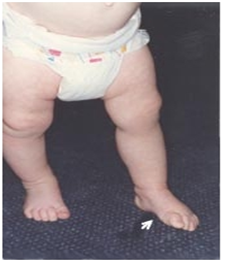
사진 설명을 입력하세요.
▴ 사진 78. 생후 9개월 된 영아가 서 있는데도 발바닥 아치(→)가 정상적으로 나 있는 것을 볼 수 있다.
Copyright ⓒ 2011 John Sangwon Lee, M.D. FAAP
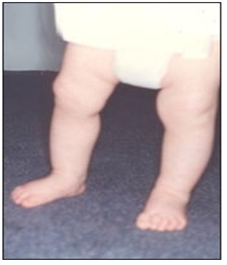
사진 설명을 입력하세요.
▴ 사진 79. 생후 10개월 된 영아가 서 있는데도 발바닥 아치가 정상적으로 나 있는 것을 볼 수 있다.
Copyright ⓒ 2011 John Sangwon Lee, M.D. FAAP
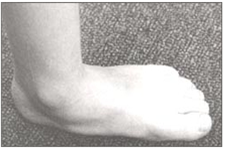
사진 설명을 입력하세요.
▴ 사진 80. 발을 바닥에서 들어올리고 발에 힘을 주지 않을 때는 그 발바닥에 아치가 정상적으로 생겨 있는 것을 볼 수 있다. 그러나 발을 바닥에 대고 그 발에 체중을 가하고 힘을 주고 서면 발바닥 아치가 없는 평발과 비슷하게 힘을 받아 편평하게 된다. 발목과 발의 인대, 건이나 근육 등이 연약한 발로 힘을 주고 설 때 아치가 없는 평발같이 발바닥이 편평하게 될 수 있다. 이런 평발을 생리적 평발이라고 한다.
Copyright ⓒ 2011 John Sangwon Lee, M.D. FAAP
.
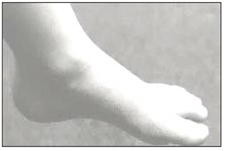
▴ 사진 81. 발목 근육이나 인대 등이 선천적으로 미약한 영유아들의 발에도 아치가 정상적으로 있지만 그 발로 힘을 주고 설 때는 발의 아치가 없는 것같이 보이고 발바닥이 편평하게 보일 수 있다. 발 사진에서 보는 것처럼 그 발을 바닥에서 위로 들어올릴 때 원래 있던 발의 아치가 나타난다. 이런 평발을 생리적 평발이라고 한다.
Copyright ⓒ 2011 John Sangwon Lee, M.D. FAAP
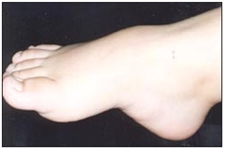
사진 설명을 입력하세요.
▴ 사진 82. 척수 종양으로 생긴 비정상적 발바닥 아치(발궁)
이 아이는 소아 건강검진을 받으러 소아청소년과에 왔을 때 발바닥에 비정상적으로 상당히 높은 아치가 있었다. 검진을 받은 후 척수 종양으로 진단받았다.
Copyright ⓒ 2011 John Sangwon Lee, M.D. FAAP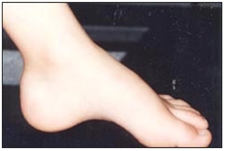
▴ 사진 83. 척수 종양으로 생긴 비정상 발바닥 아치
이 아이는 소아 건강검진을 받을 때 발바닥 아치가 비정상적으로 높다고 진단받은 후 척수 종양을 확진받았다.
Copyright ⓒ 2011 John Sangwon Lee, M.D. FAAP
■ 편평족(편평발/평발)의 원인
● 발 아치가 조금도 없는 발을 편평족, 평발, 또는 편평발이라고 한다.
● 대부분의 신생아들, 영유아들, 학령기 전 유아들의 발바닥은 정상적으로 편평하거나 발에 아치가 조금 생겨 있는 것이 보통이다.
● 발에 기질적 문제가 없이 생리적으로 생긴 이런 편평족 또는 평발을 생리적 편평족이라 한다.
● 발바닥에 정상적으로 아치가 있는 영유아들과 사춘기 이전 학령기 아이들이 두 발에 전 체중을 지탱하면서 서 있을 때 발바닥 아치가 조금도 없는 것 같이 발바닥이 편평해지고, 발이 편평하게 보일 때가 많다. 발목뼈나 발 뼈에 어떤 이상이 있을 때
● 발이나 발목의 인대, 건 등이 선천성으로 미약하거나 늘어질 때,
● 발목이나 발의 근육에 이상이 있을 때,
● 발목이나 발의 신경이 마비됐을 때는 아치가 없는 편평족이 생길 수 있고,
● 때로는 비정상적으로 아치가 더 크게 생길 수 있다.
● 척수 종양으로 발 아치가 비정상적으로 크게 생길 수 있다.
■ 편평족(편평발/평발)의 증상 징후
● 1~4세 유아를 소아청소년과에 데리고 와서 “발이 편평족(평발)인지 진찰해 달라”고 하는 부모들도 있다. 갓 태어나서부터 유치원에 입학할 때까지 대부분의 신생아들, 영유아들이 누워 있을 때, 또는 앉아 있을 때는 그들의 대부분의 발바닥에 아치가 있는 것을 볼 수 있다.
● 맨발로 발로 서 있는 동안 있는 아치가 없어지고 발바닥이 편평해지는 것이 보통이다.
● 그러나 같은 영유아들이 발을 바닥에서 떼어 들고 서 있는 동안은 발바닥에 아치가 정상적으로 뚜렷하게 다시 나타나서 발바닥이 편평하게 보이지 않는다. 즉, 발 아치가 있는 것을 볼 수 있다.
● 발바닥에 아치가 있는 건강한 영유아들이 바닥을 딛고 서 있는 동안은 발에 아치가 거의 없어지는 것이 정상이다.
● 이런 편평족을 생리적 편평족 또는 생리적 평발이라고 한다.
● 영유아들의 발의 근육, 인대, 건은 정상적으로 연약하고,
● 영유아들은 많이 서고 걸을 필요가 없고
● 조금밖에 걷지 않고,
● 또 발바닥에 살이 통통히 많이 쪄있기 때문에 발바닥에 아치가 전혀 없는 것같이 보이기도 한다.
● 또 아치가 뚜렷이 있는 발바닥으로 체중 전체를 지탱하면서 디디고 서 있는 동안 아치가 일시적으로 없어지는 것도 정상이다.
● 점점 더 자라서 많이 걸어야 할 때가 되면 영유아기에 편평하게 보이던 발바닥에 아치가 자연적으로 뚜렷하게 크게 생기는 것이 정상 성장 발육이다.
● 이런 편평족도 생리적 편평족에 속한다.
● 1~4세 유아들에게 생리적으로 생긴 편평족을 신발로 치료해서는 안 된다.
● 발 아치를 크게 만들어 주기 위해 신발의 안쪽 바닥에 패드를 대는 치료를 할 필요가 없다.
● 4~5세 정도 되면 많이 걷고 달리고 그 외 다른 육체적 운동을 많이 하기 때문에 생리적 편평족이 있는 발바닥에 아치가 뚜렷하게 정상적으로 생기게 된다.
● 아이들의 키가 서로 다른 것과 같이 아이들의 발의 아치의 크기도 제각기 조금씩 정상적으로 다르다.
● 4~5세 이후 유아들이나 학령기 아이들 중 7명 중 1명 정도는 발에 아치가 거의 없고 발바닥이 편평할 수 있다.
● 이것도 거의 정상적이다.
■ 편평족(편평발/평발)의 진단
● 병력·증상·징후·진찰 소견 등을 종합해서 편평족을 진단한다.
● 드물게 발 X선 사진 검사로 진단한다.
● 발에 정상적으로 아치가 있지만 걷거나 서 있을 때 발 아치가 아주 없는 것같이 발바닥이 편평하게 보일 때가 많다.
● 그런 유아들이나 학령기 아이들이 발의 앞부분과 발가락으로 딛고 서 있는 동안이나 그 발을 바닥 위에서 떼어 들고 있는 동안에는 그 발에 아치가 정상적으로 뚜렷하게 생겨있는 것을 보고 아치가 있는 발인지 없는 발인지 진단할 수 있다.
● 그렇지만 발을 바닥 위로 들고 있을 때 아치가 뚜렷하게 나타나 있던 발을 다시 바닥을 디디고 서면 발바닥이 또다시 편평하게 펴지고, 발 아치가 거의 없어져서 그 발이 편평족 같이 보이는 것이 보통이다.
■ 편평족(편평발/평발)의 치료
● 어리고 연약해서 영유아들의 발바닥이 정상적으로 편평하게 보이는 생리적 편평족은 아무런 치료가 필요 없다.
● 비정상적으로 생긴 병적 편평족은 신발 안쪽 바닥에 쿠션 등을 넣어 치료해 줄 수 있지만, 그런 치료의 효과는 확실치 않다.
● 편평족으로 많이 걷거나 운동을 많이 하면 발이나 발목이 많이 아플 때, 발바닥이 비정상으로 뻣뻣할 때는 원인을 찾고 원인에 따라 적절히 치료한다.
● 사실은 이런 치료를 받아야 하는 편평족은 아주 드물다.
● 그렇지만 발 아치가 지나치게 높을 때는 의사의 진단과 치료를 꼭 받아야 한다.
● (사진 82, 83 참조)
● 대부분의 편평족은 정상적으로 생기는 생리적 편평족이다.
● 사진 82와 83에서 생후 4세까지는 정상적으로 발바닥에 아치가 있었다.
● 그 후 발바닥 아치가 아주 심하게 생겼던 예이다.
● 자세한 검진과 검사에서 척수 종양을 진단했다.
Copyright drleepediatrics.com 2/26/2026
Preschool-age children typically have naturally flat feet or slightly arched feet.
● This type of flatfoot, or flat feet, that develops physiologically without any underlying foot problems, is called physiological flatfoot.
● When infants and pre-adolescent school-age children with normal arches stand with their full weight on both feet, the soles of the feet often flatten, making the feet appear flat, as if the arches are completely absent. This can occur when there is an abnormality in the ankle or foot bones.
● Congenital weakness or laxity of the ligaments or tendons in the foot or ankle.
● Muscle abnormalities in the ankle or foot.
● Paralysis of the nerves in the ankle or foot can cause flat feet.
● Occasionally, the arches can become abnormally large.
● Spinal tumors can cause abnormally large arches.
■ Symptoms and Signs of Platysma (Flat Feet)
● Some parents bring their children aged 1 to 4 to the pediatrician’s office and ask, “Can I have my feet examined for flat feet?” From birth to kindergarten, most newborns and toddlers have visible arches on the soles of their feet when lying down or sitting.
● While standing barefoot, it’s common for the arches to disappear and the soles of the feet to flatten.
● However, when these same toddlers lift their feet off the ground, the arches reappear normally and clearly, preventing the flattening. In other words, the arches are still visible.
● It’s normal for healthy toddlers with arches to lose most of their arches while standing.
● This type of flat feet is called physiological flat feet.
● The muscles, ligaments, and tendons in the feet of infants and toddlers are normally weak.
● Infants and toddlers do not need to stand or walk much.
● They only walk a little.
● Also, because the soles of their feet are plump and fleshy, they may appear to have no arch at all.
● It is also normal for the arch to temporarily disappear while the child stands and supports their entire body weight on the well-defined arch.
● As they grow and begin to walk more, the arches on the soles of their feet, which appeared flat in infancy, naturally become more pronounced. This is normal growth and development.
● This type of flatfoot is also considered a physiological flatfoot.
● Physiological flatfoot in children ages 1 to 4 should not be treated with shoes.
● There is no need to use shoe pads to increase the arch size.
● Around the age of 4-5, children walk a lot, run, and engage in other physical activities, so a distinct and normal arch develops on the soles of their feet, even if they have physiological flat feet.
● Just as children vary in height, the size of their foot arches also varies slightly within each child.
● After the age of 4-5, approximately 1 in 7 toddlers and school-age children may have flat soles with minimal arches.
● This is also generally normal.
■ Diagnosis of Flat Feet (Flat Feet/Platy Feet)
● Flat feet is diagnosed based on a comprehensive review of medical history, symptoms, signs, and physical examination findings.
● In rare cases, a foot X-ray examination is used to diagnose the condition.
● Although the foot has a normal arch, the soles of the feet often appear flat, as if there is no arch at all, when walking or standing.
● When infants and school-age children stand on the forefoot and toes, or lift their feet off the floor, the presence or absence of a normal, distinct arch can be identified by observing the presence or absence of a distinct arch.
● However, when a foot with a distinct arch is lifted off the floor, the sole of the foot flattens again when the foot is placed on the floor again, and the arch is almost completely gone, giving the foot a flat-footed appearance.
■ Treatment for Flat Feet (Flat Feet/Flat Feet)
● Physiological flat feet, which are normally flat in infants and young children due to their young age and frailty, do not require any treatment.
● Abnormally shaped, pathological flat feet can be treated by inserting cushions into the soles of shoes, but the effectiveness of such treatments is uncertain.
● If flat feet cause significant foot or ankle pain or unusually stiff soles after excessive walking or exercise, the underlying cause should be identified and appropriate treatment provided.
● In fact, flat feet that require this type of treatment are very rare.
● However, if the arches are excessively high, it is essential to seek medical diagnosis and treatment.
● (See Photos 82 and 83)
● Most flat feet are physiological flat feet that occur normally.
● In Photos 82 and 83, the arches were normal until the age of four.
● This is a case where the arches developed significantly thereafter.
● A spinal tumor was diagnosed after a thorough examination and testing.
Copyright drleepediatrics.com 2/26/2026