Breastfeeding and Maternal Medication Use
● When a breastfeeding mother requires any form of drug therapy, she should, whenever possible, consult with her physician *before* initiating treatment. She may proceed with the medication only after the physician confirms that the treatment poses no harm to her nursing infant.
● This precaution is necessary because medications used to treat a mother’s medical conditions can potentially affect her nursing infant.
● For instance, if a pregnant or breastfeeding woman is being treated for depression using Serotonin Reuptake Inhibitors (SSRIs), the nursing infant may develop symptoms such as agitation, tremors, vomiting, hypoglycemia, hypothermia, respiratory distress, seizures, or feeding difficulties.
■ Caution is advised when a breastfeeding mother undergoes treatment with the following medications, as they may have an impact on the nursing infant.
■ In particular, if a breastfeeding mother is being treated with the following medications, breastfeeding is *not* recommended. (Note: For reference, all medication names listed here are provided in English whenever possible.)
Bromocriptine, Cocaine, Cyclophosphamide, Cyclosporine, Doxorubicin, Ergotamine, Lithium, Methotrexate, Phencyclidine (PCP), Phenindione, etc.
■ Breastfeeding is not recommended if a breastfeeding mother is abusing the following substances:
Amphetamines, Cocaine, Heroin, Marijuana, Nicotine, Phencyclidine, etc.
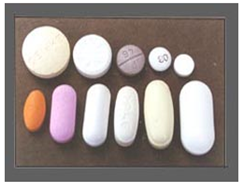
▴ Photo 4-185. Various Types of Medications
Copyright ⓒ 2011 John Sangwon Lee, MD, FAAP
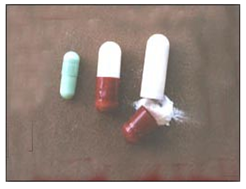
▴ Photo 4-187. Various Types of Medications
Copyright ⓒ 2011 John Sangwon Lee, MD, FAAP
■ If a breastfeeding mother undergoes treatment involving the following radioactive medications, she must temporarily discontinue breastfeeding:
Copper-64, Gallium-67, Indium-111, Iodine-123, Iodine-125, Iodine-131, Radioactive Sodium, Technetium-99, etc.
■ If a breastfeeding mother undergoes treatment involving the following medications, they may be harmful to the nursing infant: 1) Anti-anxiety drugs, such as Alprazolam (Niravam, Xanax), Diazepam, Lorazepam (Ativan), Midazolam (Versed), Perphenazine (Trilafon), Prazepam (Centrax), Quazepam (Doral), and Temazepam (Restoril).
2) Antidepressants (Anti-depression drugs), such as Amitriptyline (Elavil), Amoxapine (Asendin), Bupropion (Aplenzin, Wellbutrin), Clomipramine (Anafranil), Desipramine (Norpramin, Pertofane), Dothiepin, Doxepin, Imipramine (Tofranil), Trazodone (Desyrel, Oleptro), Fluvoxamine (Luvox), Nortriptyline (Aventyl, Pamelor), Paroxetine (Paxil), and Sertraline (Zoloft).
3) Antipsychotic drugs, such as Chlorpromazine (Thorazine), Chlorprothixene (Cloxan, Taractan, Truxal), Clozapine (Clozaril), Haloperidol (Haldol), Mesoridazine (Serentil), and Trifluoperazine (Stelazine).
4) Other medications, such as Chloramphenicol, Amiodarone (Cordarone, Pacerone), Clofazimine (Lamprene), Lamotrigine (Lamictal), Metoclopramide (Reglan, Metozol, Maxolon), Metronidazole (Flagyl), and Tinidazole (Tindamax).
■ If a breastfeeding mother undergoes treatment with any of the medications listed above, it may have a significant impact on her nursing infant. Medications such as Aspirin (acetylsalicylic acid), Acebutolol (Sectral), Mesalamine (5-aminosalicylic acid), Atenolol (Tenormin), Bromocriptine (Parlodel), Clemastine, Ergotamine, Lithium, Phenindione, Phenobarbital, Primidone, and Salicylazosulfapyridine (sulfasalazine).
■ Foods and Environmental Substances Affecting Breastfeeding
Aflatoxin, Aspartame, Bromide (photographic laboratory), Cadmium, Chlordane, Chocolate (theobromine), Chlorophenothane, Benzene hexachlorides, Dieldrin, Aldrin, Heptachlor epoxide, Fava beans, Fluorides, Hexachlorobenzene, Hexachlorophene, Lead, Mercury, Methylmercury, Methyl methacrylate, Monosodium glutamate (MSG), Polychlorinated biphenyls and Polybrominated biphenyls, Silicone, Tetrachloroethylene cleaning fluid (perchloroethylene), Vegetarian diet, etc.
Tetrahydrocannabinol-9 is present in the breast milk of nursing mothers who habitually smoke cannabis. Although the extent of the impact that cannabis-containing breast milk has on an infant’s brain remains unknown, nursing mothers are advised not to smoke cannabis.
Source: NEJM Journal Watch, June 2018
■ Sources and References
● *Pediatrics* Vol 116 #6, Dec 2005; *Nelson Textbook of Pediatrics*, Richard Behrman, M.D., et al.; *Guidelines for Perinatal Care*, American Academy of Pediatrics, pp. 224–229.
● The Johns Hopkins Hospital, *The Harriet Lane Handbook*, 18th Edition.
● *Nelson Textbook of Pediatrics*, 15th Edition.
● *Pregnancy Bible*, Joanne Stone, M.D., and Keith Eddleman, M.D., “Preparation for Birth.”
● *The Complete Guide to the Lamaze Method*; *Neonatology for the Clinician* by Jeffrey Pomerance and C. Joan Richardson.
● *Neonatology: Diseases of the Fetus and Infant*, edited by Richard E. Behrman.
*Parents, You Too Must Become Half-Doctors* (www.koreapediatrics.com) — Text excerpted from the book *Breast Milk, Breastfeeding, and Weaning*, published by Joeun Ddang.
Comprehensive, Up-to-Date Information That Is Both Practical and Easy to Understand
Parents, You Too Must Become Half-Doctors.
I am writing to introduce myself as I begin posting content on http://blog.naver.com/drsangwonlee.
Hello!
To all Korean parents across the globe!
I invite you to join the “True Parenting Bible Reading Campaign”—a must-read initiative for the 80 million Koreans living worldwide.
As a board-certified pediatrician in both the United States and Korea—Dr. John Sangwon Lee, M.D., FAAP—I wish to offer the following information as a gift to my homeland and to the 80 million Koreans around the world. This serves as an essential “Parenting Bible” covering topics such as child-rearing, health promotion, disease diagnosis and treatment, preventive care, how to truly love your children, sleep habits, sex education for children and adolescents, and character education. 1. http://www.koreapediatrics.com/Parents-Too-Must-Become-Half-Doctors — Approximately 20,000 pages. 13412 Title: Pediatric Website (Operated by Lee Sang-won), Launched in 2013
2. Encyclopedia of Pediatric and Family Medicine — 618 pages, Published in 1988
3. Encyclopedia of Pediatric and Family Nursing Care: Parents, Too, Must Become “Half-Doctors” — 1,076 pages, Published by Cheongmungak in 1998
4. Growth, Development, and Parenting: From Newborns to Infants, School-Aged Children, and Adolescents — 623 pages, Published by Joeunttang in 2014
5. Newborns: Growth, Development, Care, and Illnesses — 610 pages, Published by Joeunttang in 2014
6. Breast Milk, Breastfeeding, and Weaning — 308 pages, Published by Joeunttang in 2014
7. Pediatric and Adolescent Epilepsy (Seizures) + 100 Questions and Answers on Epilepsy — 240 pages, Published by Joeunttang in 2015
8. From Pregnancy to Newborn Care — Approx. 300 pages, Published by Cheongmungak in 1998
9. Raise Your Sons and Daughters with This Kind of Love — 210 pages; Translated Work (A Global Classic); Authored by Ross Campbell, M.D.; Published by Seomundang in 1988
11. Drugs and Children — Approx. 200 pages, Published in 1988
12. Raise Your Sons and Daughters with True, Unconditional Love—And How to Provide Character Education — 647 pages, Published by Yangseogak in 2016
13. https://www.flickr.com/people/drleesangwon
14. http://blog.naver.com/drsangwonlee
15. https://www.facebook.com/drleesangwon
16. Pediatric Columnist for Newyorkkorea.net
17. Other Activities
An Essential Resource for the Lives of Koreans—Young and Old, Male and Female—Both in the Homeland and Around the World I believe that more than a century has passed since the need arose for a definitive “Parenting Bible”—a comprehensive resource containing health-promotion information in Korean that anyone, anywhere, and at any time can easily access and read, thereby fulfilling one of the fundamental prerequisites for a healthy life.
If I had the means, I would wish to gift a copy of this Parenting Bible to every Korean household around the world.
If I had the time, I would wish to sit down with beloved Korean parents and read this entire Parenting Bible aloud to them.
Of course, there may be areas where this work falls short. However, I am confident that if parents raise their children while referencing this resource—perhaps alongside other parenting guides—those children will undoubtedly grow up to be happy and healthy individuals.
Sincerely,
Sangwon Lee, MD
Connecticut, USA Medical License #016370
Korea Medical License #7794
Honorary Member, American Academy of Pediatrics (AAP)
Board-Certified Pediatrician (Korea)
Top Pediatrician (USA)
Copyright © 2017 John Sangwon Lee, MD, FAAP
Most of the content in this post is derived from the website www.koreapediatrics.com. While the material is professional in nature, I believe it will be of great assistance to you in raising your children and adolescents. However, please note that the information provided here is not intended to replace the medical advice or treatment you receive from your own physician. (From www.koreapediatrics.com: “Parents, Too, Should Become Half-Doctors.”)
Copyright drleepediatrics.com 2/28/2026