뇌졸중에 걸인 사랑하는 아내를 돌보면서 서문과 차례 Caring for my beloved wife who suffered a stroke Preface and Table of Contents
For more information, please visit drleepediatrics.com. search 정보를 더 찾으려면 drleepediatrics.com 방문한 후 Search에서 찾아보세요.

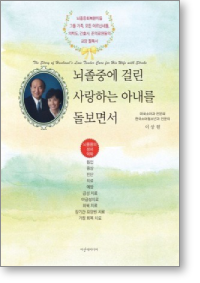
Caring for My Beloved Wife Who Suffered a Stroke – Preface and Table of Contents
For more information, please visit drleepediatrics.com and use the search function.
Preface
As a husband who has shared life’s ups and downs with his wife for 53 years—and as a general practitioner and pediatrician—I spent an entire year providing round-the-clock care (24 hours a day, 7 days a week, without a single day off) for my wife as she struggled through the aftermath of a stroke.
Throughout her recovery, rehabilitation, and home-based care, I served as her primary family caregiver. In the process of looking after her with affection, compassion, love, patience, acceptance, and a commitment to healing, I gained a deep understanding of strokes.
Drawing upon knowledge gathered from my wife’s attending physicians, her rehabilitation and recovery teams, medical textbooks, educational pamphlets for the public, and various other resources, I have compiled this work, *Caring for My Beloved Wife Who Suffered a Stroke*. It is my pleasure to share this with the Korean-American community, the people of my homeland, and the 80 million Koreans living across the globe.
It is my sincere wish—and my earnest request—that stroke survivors, their families (especially those acting as caregivers), and indeed all Koreans, regardless of age or gender, read this book at least once and utilize it whenever the need arises. In January 2018, my beloved wife suffered a sudden stroke. She was admitted to Hartford Hospital—a facility specializing in acute stroke care—where she spent the next year bedridden, enduring a long and difficult battle with her illness before eventually passing away.
Looking back, I must confess that although I was a practicing pediatrician in the United States, I knew remarkably little about strokes before this happened to my wife.
Last November, while she was outside clearing snow with our second son (who is an internist), she suddenly came back indoors. In a slurred, labored voice, she asked me to take a look at her, saying something felt wrong with her left arm and leg. Upon examining her, I immediately noticed that one side of her face was drooping, her speech was impaired, and she was experiencing paralysis in her left arm and leg.
I was struck by a sense of profound shock, darkness, and sorrow.
I immediately called 119 (emergency services). Within three minutes, my wife was placed in an ambulance, and the rest of our family followed in our own car to Hartford Hospital—one of the largest medical centers in the United States and a facility equipped for acute stroke intervention.
Within just an hour of our arrival at the emergency department, she was diagnosed with a hemorrhagic stroke, caused by bleeding in the right frontal lobe and the subarachnoid space. She was promptly admitted to the acute stroke intensive care unit.
After receiving a week of acute-phase stroke diagnosis and treatment there, she was transferred to Gaylord Hospital for the next stage of her recovery—specialized subacute stroke rehabilitation. At the hospital, my wife received care for six weeks from a stroke rehabilitation team that included a physiatrist (rehabilitation physician), physical therapists, occupational therapists, a speech-language pathologist, a clinical social worker, a chaplain, and nurses. We were advised that, following this subacute rehabilitation phase, she should either be admitted to a skilled nursing facility or continue her stroke rehabilitation at home. After completing her subacute rehabilitation, she was discharged home.
Once home, she continued her rehabilitation through a team coordinated by the Hartford HealthCare network. This team—which included a physician, physical therapists, occupational therapists, a speech-language pathologist, nurses, a clinical social worker, a home health aide, and a recreational therapist—provided ongoing care.
Although I am a pediatrician—licensed to practice in both South Korea and the U.S. state of Connecticut—I found it difficult to decide whether it was truly best for my wife, who had suffered a stroke, to receive her rehabilitation at home, or if she would be better served in a skilled nursing facility or a similar long-term care setting—potentially for months, years, or even for the remainder of her life.
My children and I held differing views on which approach would best serve her health, well-being, and happiness.
I insisted that I, as her husband, would take on the responsibility of caring for her at home. My children, however, questioned how I—given my own advancing age—could effectively provide the necessary care for their mother. They argued that since I, too, might need assistance, it would be better to place her in a skilled nursing facility or another appropriate care center where she could receive professional rehabilitation and support. I reached out to family and relatives living in various places—including Brazil, South Korea, and the United States—to explain the situation and ask for their thoughts. They all responded with the same sentiment: “You must be exhausted, both physically and mentally; this is such a difficult burden for you.” Their unanimous advice was, “You should send her to a nursing home immediately.”
How heartless, I thought…
At that moment, my beloved wife pleaded with me, “Please, don’t send me away! I want to stay in our own home and receive my care from you—please, I beg you, save me!” She clung to me, tears streaming down her face.
She was right.
I decided that I would continue her recovery and rehabilitation at home.
From then on, I took on every role—husband, housekeeper, cook, domestic helper, cleaner, and primary caregiver overseeing her stroke rehabilitation—handling everything from A to Z to ensure her well-being. It has now been nearly a year since I began this role as her caregiver.
Unfortunately, she suffered several recurrent strokes, and her health steadily declined; she eventually lost the ability to control her bodily functions and became bedridden, unable to leave her bed at all.
I cared for my beloved wife—a woman of great dignity—with deep compassion, affection, and love, striving to uphold the medical principle: “First, do no harm.”
Throughout this process, I followed the guidance, advice, instructions, and encouragement of her physicians and stroke care specialists. I consistently engaged in training—both directly and indirectly—on stroke recovery and rehabilitation, and I dedicated myself fully to the role of a home-based caregiver, supporting her recovery and rehabilitation every step of the way. Despite some differences of opinion among family members, it was ultimately decided that I would personally care for my wife at home following her stroke. During this time, I continued to educate myself about the condition by studying medical literature, as well as pamphlets designed for stroke survivors, their families, and the general public.
I learned that nearly one million people in the United States suffer a first-time stroke each year, that approximately one in five people will experience a stroke in their lifetime, and that someone suffers a stroke every 40 seconds. Based on these figures, I estimated that in South Korea—with a total population of 50 million—roughly 210,000 people could potentially be affected by a stroke annually.
I also learned that one in five elderly people—individuals who have worked hard their entire lives and deserve to live their twilight years in greater happiness—will fall victim to this serious illness, suffering through it before eventually passing away.
As a physician, having cared for my own wife after her stroke—managing her treatment, rehabilitation, and daily needs—I felt a strong desire to share detailed information about stroke with the Korean-American community, the people of my home country, South Korea, and the 80 million Koreans living around the world.
I felt an immense urge to help others by teaching them how to prevent a stroke from occurring in the first place.
As I’ve mentioned—and while many of you may already be well-informed—I strongly encourage you to read this book at least once.
Through the process of caring for my wife, I have essentially gone through an “internship” and “residency” in stroke care; I feel as though I have become a specialist in the field.
I want to shout from the rooftops: identify the risk factors for stroke, manage and modify them, and take proactive steps to prevent this condition from ever happening.
Furthermore, I want to teach people that if a stroke does occur, not a single second should be wasted—seek emergency diagnosis and treatment at a hospital immediately, and ensure that comprehensive rehabilitation follows. I also wish to help educate the families and caregivers of stroke survivors, so that they may be better equipped—physically and mentally—to provide excellent care for their loved ones.
If you are unfamiliar with this condition, I hope this book serves as a starting point for your learning. Should you need further information, I encourage you to consult additional resources on stroke and take full advantage of the educational guidance provided by frontline medical professionals.
It is important to recognize that everyone involved—including the medical and allied health professionals, society, the nation, family members, and relatives—forms a collective team dedicated to the care, rehabilitation, and recovery of stroke patients. Together, we can support our elderly loved ones who have suffered a stroke, offering them the care and compassion they deserve.
Given that anyone—including the author of this book—faces a 25% lifetime risk of experiencing a stroke, this is not a matter to be taken lightly.
Rather than viewing it as something that only happens to others, we must recognize that it could happen to any of us. It is essential to understand the causes, diagnosis, treatment, nursing care, and rehabilitation associated with stroke, as well as the risk factors, so that we may take proactive steps toward prevention.
As I have mentioned, my own experience—serving as a physician, husband, cook, housekeeper, and caregiver—has involved navigating the acute emergency phase, ongoing follow-up care, and rehabilitation for my wife, who suffered a stroke. Through this journey, I have come to understand the multifaceted role of a caregiver, and I wish to share these insights with others in similar positions.
In writing this book, there may be shortcomings or instances of repetition. Furthermore, depending on the era, country, or region in which you live, some of the recommendations provided here may be difficult to implement when caring for a stroke survivor. I hope this book serves as a helpful resource—not only for stroke survivors but for anyone with risk factors for a stroke—by offering guidance on how to manage those risks, prevent a stroke from occurring, and prepare for how to respond should one happen.
For family caregivers, who take on tasks such as assisting with toileting, preparing meals, and feeding, this book can serve as a valuable reference when working alongside a rehabilitation team—a group that may include attending physicians, nurses, clinical social workers, physical therapists, occupational therapists, and speech-language pathologists.
The process of rehabilitation following a stroke affects not only the survivors themselves but also their families—especially the primary caregivers—impacting their mental and physical well-being. It is not uncommon for them to experience depression or burnout; this book also aims to provide strategies for coping with such challenges.
In this sense, the stroke survivors, their families, attending physicians, rehabilitation healthcare providers, society, and the nation are all members of the stroke rehabilitation team. Furthermore, the physical, cognitive, linguistic, mental, psychological, emotional, spiritual, and social challenges that arise following a stroke are far too complex for survivors and their families to manage on their own.
Effective rehabilitation requires the support of others who can assist the families and caregivers. Without such support, families and caregivers may easily fall into states of anxiety, anger, sadness, or depression. While it is essential for stroke survivors and their families to be well-informed about the condition, there is a scarcity of accessible, practical reference materials—such as books—for the general public to study the subject.
Although free English-language pamphlets on stroke are widely available for the education of survivors and their families, it is difficult to find a comprehensive reference book in Korean that one can easily hold and consult to learn about stroke.
I would like to share that this book is the culmination of my diverse professional and personal experiences: my decades of practice as a general physician and as a pediatrician, combined with the firsthand, practical knowledge I gained while serving as a caregiver for my beloved wife throughout her year-long recovery from a stroke.
It is true that the healthcare system in the United States differs significantly from those in Korea and other nations. While not every recommendation in this book may be directly applicable everywhere, the core objectives—ensuring the well-being, happiness, and rehabilitation of stroke survivors, as well as supporting the heroic efforts of family caregivers—remain universal, regardless of whether one is in the United States, Korea, or elsewhere.
As Korea has now joined the ranks of the world’s most culturally and economically advanced nations, I hope that Koreans will find the information in this book helpful in caring for those affected by stroke.
Having spent nearly a year caring for my wife through her stroke, I approach the treatment and care of stroke patients with a deep sense of compassion, love, commitment, respect, and responsibility. As I share a bedroom and a blanket with my wife—who can no longer sit or stand, and must remain lying down all day long—I dedicate this book to her, my wife, pharmacist Lee Chun-ja, on the occasion of her 78th birthday.
Thank you.
November 2, 2018
Sang-Won Lee, MD, FAAP (Pediatrician, USA & South Korea)
The National Stroke Association’s mission is to reduce the incidence and impact of stroke by developing compelling education and programs focused on prevention, treatment, rehabilitation, and support for all those affected by stroke.
Source: National Stroke Association
 뇌졸중 생존자 음악 치료 Music treatment
Copyright drleepediatrics.com 3/11/2026
Table of Contents
Biography (on the back cover)
Introduction
Chapter 1: Stroke
Chapter 2: Anatomy of the Human Nervous System
Chapter 3: Causes and Classification of Stroke
Chapter 4: Epidemiology of Stroke
Chapter 5: Recognizing Stroke Risk Factors
Chapter 6: Symptoms of Stroke
Chapter 7: Diagnosis of Stroke
Chapter 8: Complications and Treatment of Stroke
Chapter 9: Stroke Treatment
Chapter 10: Stroke Prevention
Chapter 11: Caregiving for Stroke Patients
Chapter 12: Preventing Accidents at Home
Chapter 13: Index
Chapter 14: References
Chapter 8: Complications of Stroke
Chapter 9: Stroke Treatment
If you notice the initial signs of a stroke—remember the acronym FAST (Face, Arm, Speech, Time)—take the following steps:
1. Go to a hospital equipped for acute emergency care, preferably by ambulance.
2. Receive acute emergency treatment.
3. Undergo emergency surgical intervention, if necessary.
4. Receive emergency pharmacological (medication-based) treatment, if necessary.
Emergency surgical interventions may include:
1) Emergency endovascular procedures
2) Intra-arterial thrombolysis
3) Intra-arterial clot removal (thrombectomy) and stenting
4) Carotid endarterectomy
5) Angioplasty and stenting 4. Emergency treatment for hemorrhagic stroke
5. Hypertension treatment and prevention for stroke survivors
(1) Definition of hypertension
(2) Causes of hypertension
(3) Who is more susceptible to hypertension?
(4) How can you tell if your blood pressure is abnormally high?
(5) What happens if hypertension is left untreated?
(6) What should you do if you have hypertension?
(13) Treating hypertension with medication
(14) What are medications for hypertension?
(15) What to know when receiving medication for hypertension
(16) How to ensure blood pressure medication is taken on time
(17) What types of medications are used to treat hypertension?
Diuretics –
Beta-blockers –
Vasodilators –
Angiotensin-converting enzyme (ACE) inhibitors –
Angiotensin II receptor blockers (ARBs) –
Calcium channel blockers –
(18) Side Effects of Antihypertensive Medications
(7) Antihypertensive Medications
Vasodilators
Diuretics
Other Antihypertensive Agents
How to Lower High Blood Pressure to a Normal Level
6. How to Maintain a Healthy Body Weight
7. How to Limit Salt (Sodium) Intake
8. How to Limit Alcohol Consumption
9. How to Engage in Physical Activity and Exercise
19) Stroke Related to Cerebral Amyloid Angiopathy
1) Symptoms of Cerebral Amyloid Angiopathy
2) Risk Factors for Cerebral Amyloid Angiopathy
3) Causes of Cerebral Amyloid Angiopathy
4) Diagnosis of Cerebral Amyloid Angiopathy
5) Treatment for Stroke Related to Cerebral Amyloid Angiopathy
20) Essential Home Medical Supplies, Therapeutic Devices, and Exercise Equipment for Stroke Survivors
21) Surgical Procedures for Vascular Repair After a Stroke
1. Surgical Clipping
2. Coiling (Endovascular Embolization)
3. Surgical Removal of Arteriovenous Malformations (AVM)
4. Stereotactic Radiosurgery
Outcomes of Surgical Treatment for Stroke
22) Coping Strategies and Supportive Care
1) It is often difficult to expect a full recovery from the mental and physical impairments following a stroke. Be kind to yourself. 1. Get out of the house and meet other people, even if it is difficult.
2. Join a support group to meet new people, form new friendships, and help one another.
3. Understand that you are not the only one who has had a stroke; you are not alone.
4. Communicate with other stroke survivors.
5. Prepare for your doctor’s appointments.
6. Know what to expect regarding treatment from your doctor.
7. Prevent aspiration pneumonia.
8. Nutrition for stroke survivors:
1. Reduce salt intake.
2. Reduce cholesterol intake. 5 High Cholesterol and Triglycerides
1) Is it harmful to health if blood cholesterol levels are higher than normal?
2) How can blood cholesterol levels be managed?
3) Increasing fiber intake to lower blood cholesterol levels
4) Omega-3 fatty acids
5) Triglycerides
6) Types of fats
(1) Saturated fats
(2) Trans fats
(3) Polyunsaturated fats
(4) Monounsaturated fats
7) Normal blood cholesterol levels
9) Which types of blood lipid levels should you be aware of?
10) HDL cholesterol
11) LDL cholesterol
12) Triglycerides
3. How can high blood cholesterol levels be maintained within a normal range?
4. Which foods are beneficial for maintaining normal blood cholesterol levels?
5. Foods to limit in order to maintain normal blood cholesterol levels
6. Incorporating various fruits and vegetables when preparing food
7. Medications that can lower blood cholesterol levels
2) Hypercholesterolemia may be treated with medication if certain health conditions are present
8. What medications are used to treat hypercholesterolemia?
1) Statins
2) Alternatives to statin therapy
(1) Bile acid sequestrants
(2) Fibrates
(3) Niacin
(4) PCSK9 inhibitors
(5) Selective cholesterol absorption inhibitors
Anticoagulants and antiplatelet agents
1) Anticoagulant therapy
2) Anticoagulants Side Effects
3) Antiplatelet Therapy
Rehabilitation Team for Stroke Survivors
1. What Is Rehabilitation?
For Stroke Survivors
2. The Rehabilitation Team and Its Members
1) Physiatrist (Rehabilitation Physician):
2) Physical Therapist: 3) Occupational therapist
4) Rehabilitation nurse
5) Speech-language pathologist
6) Recreational therapist
7) Psychiatrist and clinical psychologist
8) Vocational rehabilitation counselor
9) Clinical dietitian/culinary specialist
10) Clinical social worker
11) Pastor or priest
12) Music therapist
13) Others
Settings for stroke survivor rehabilitation: homes, hospitals, and facilities
1. Skilled nursing rehabilitation facilities
2. In-home rehabilitation for stroke survivors
3. When does stroke recovery begin?
4. Rehabilitation for stroke survivors
If you suspect a stroke or notice the initial warning signs (FAST):
Face
Arm
Speech
Time
5. Settings where stroke survivors can receive rehabilitation:
1) Home-based rehabilitation
2) Outpatient rehabilitation clinic
3) Long-term acute care hospital
4) Subacute rehabilitation facility
5) Skilled nursing rehabilitation facility
6) Extended rehabilitation facility
7) Stroke rehabilitation unit
Music therapy for stroke survivors
Palliative care and hospice care for stroke survivors
Stroke complications and their treatment
Complications in stroke survivors:
Cerebral edema
Pneumonia
Urinary tract infection (UTI)
Seizures
Depression
Pressure ulcers (bedsores)
Limb contractures
Shoulder pain
Deep vein thrombosis (DVT) Thrombosis—
Hallucinations,
Delusions
Psychiatric syndromes following a stroke
Language impairment (aphasia),
Dysphagia (difficulty swallowing)
Pressure ulcers (bedsores)
Other complications
Treatment of stroke complications
Common stroke complications
1. Difficulty swallowing (dysphagia)
2. Urinary tract infections (UTIs)
3. Seizures
3. Nutritional issues in stroke survivors
4. Gastrointestinal bleeding
5. Cardiac (heart) problems
5. Pressure ulcers (bedsores)
6. Falls
1) When a stroke survivor falls
2) Getting up after a fall (for stroke survivors)
Home-based rehabilitation for stroke survivors: Assessing and modifying the home environment for safety
1. General home safety conditions
1) Presence of emergency exits
2) Presence of pets
2. Recommendations for an ideal, safe home environment
1) An ideal, safe bedroom for a stroke survivor undergoing home-based rehabilitation
2) Recommendations for an ideal, safe bedroom for a stroke survivor undergoing home-based rehabilitation
3) Are the restroom, bathroom, and shower area safe?
4) Recommendations for a safe restroom, bathroom, and shower area
5) Ideal safety measures for the kitchen ………………………
Anticoagulants and antiplatelet agents
Stroke survivors and their families require support from the state and society—medically, financially, psychologically, and physically. At the same time, survivors and their families should educate themselves extensively about stroke, so that they—alongside the state and society—can become active members of the stroke treatment team. Copyright drleepediatrics.com 3/11/2026