40% of Children Have Their Own Tablet by 2 Years Old, Report Finds
보고서에 따르면 2세가 되기 전에 40%의 어린이가 태블릿을 소유
Screens are increasingly woven into daily life, with 1 in 5 parents using mobile devices to support bedtime, meals, and emotional regulation. See how families are finding balance.
Save this article to view it later on your Bump dashboard. It’s free!
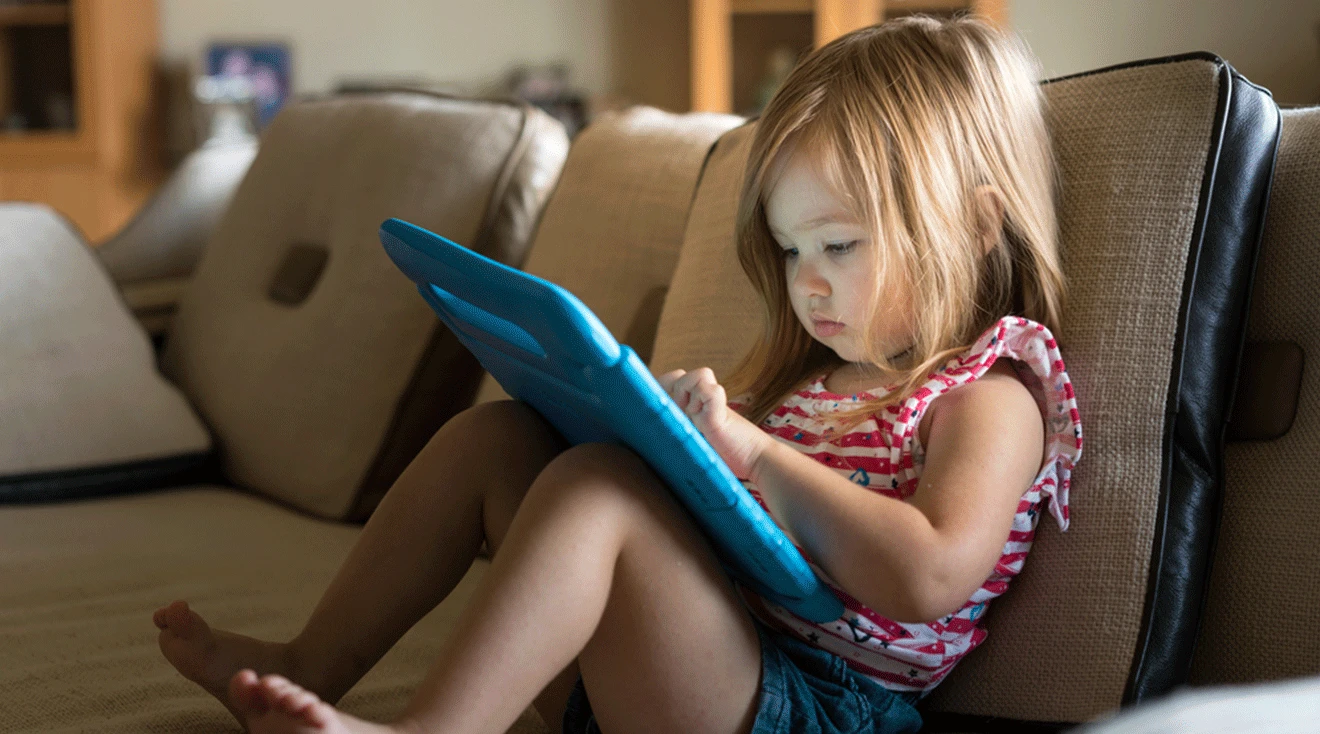
Image: Steve Heap | Shutterstock

Parenting a toddler often feels like a constant balancing act—one moment, you’re determined to keep screens at bay, and the next, you’re handing over a tablet at dinner in an effort to save your sanity or finding joy connecting over Ms. Rachel. The reality is, screens have become an almost unavoidable part of modern parenting, and finding the right balance between expert recommendations and day-to-day survival isn’t easy.
Common Sense Media’s 2025 Census on Media Use by Kids Ages 0-8 offers a revealing look at how deeply screens have become embedded in early childhood. The findings highlight the growing presence of personal devices in young children’s lives and the ongoing struggle parents face in balancing screen time with expert recommendations and real-life demands.
Starting Younger and a Shift in Content
Despite 75-80% of parents expressing concerns about the impact of screen media, screens continue to take hold in children’s lives. The study found that 40% of children have their own tablet by age 2, with that number increasing to 60% by age 4.
Overall, children under 2 years old now average 1 hour and 3 minutes of screen time daily, while 2- to 4-year-olds spend just over 2 hours. Kids ages 5 to 8 stretch their screen use to 3.5 hours per day. While total screen time is only up 14 minutes from 2020, the way kids consume media is changing. Traditional TV and cable are fading, while more time is spent watching short-form videos on social media sites like TikTok, Instagram Reels and YouTube Shorts.
Screens as a Parenting Tool
This increase of personal screens at even earlier ages doesn’t just align with more social media consumption. Burnt out parents who are increasingly overwhelmed with the demands of work, parenting and home life continue to turn to devices not just for education and entertainment but also as another hand in daily tasks. The study found that 1 in 5 families now use mobile devices to assist with bedtime, mealtimes and emotional regulation.
Source Yahoo, 3/10/2025
보고서에 따르면 2세가 되기 전에 40%의 어린이가 태블릿을 소유