땀이 많이 날 때(다한증)
Excessive sweating (Hyperhidrosis)
■ 땀이 많이 날 때(다한증)의 원인, 증상 진단, 치료
● 땀샘에는 아포크린 땀샘과 에크린 땀샘 두 종류가 있다.
● 아포크린 땀샘은 외이도, 겨드랑이, 유두, 항문 주위에만 주로 분포되어 있다.
● 아포크린 땀샘의 기능은 확실치 않으나 체취를 만들어 내는 땀샘이다.
● 에크린 땀샘은 땀을 분비해서 체온 조절과 피부 건강 유지에 주로 관여한다.
● 감정의 변화에 따라 땀이 더 분비되고 덜 분비될 수 있다.
● 에크린 땀샘은 이마, 겨드랑이, 손과 발바닥에 더 많이 분포되어 있다.
● 땀은 에크린 땀샘에서 정상적으로 난다.
● 인간에게 체온 조절 중추가 뇌 속에 정상적으로 있다.
● 체온 조절 중추는 우리 몸의 체온을 일정하게 유지하는 역할을 총 관리한다.
● 체내의 온도가 정상 이상으로 올라가면 땀을 내서 체온을 내려 정상 체온을 유지하게 하는 것이 정상적 생리이다.
● 뜨거운 음식물을 먹거나 주위 온도가 높아지거나 옷을 너무 덥게 입거나 열을 체외에서 필요이상으로 많이 받을 때 땀을 내서 체온을 적절히 낮추어 정상적으로 체온을 유지하는 것이 정상이다.
● 병이 없는 데도 육체적 운동을 할 때 체내에서 열이 발생한다.
● 이 때 생긴 열을 내리고 정상 체온을 유지하기 위해서 땀이 날 수 있다.
● 스트레스를 받을 때도 거의 같은 이치로 열이 날 수 있고 땀이 날 수 있다.
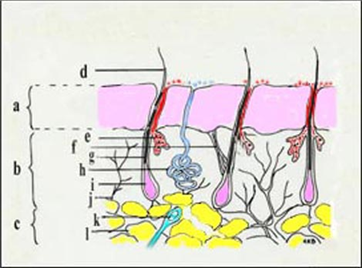
사진 설명을 입력하세요.
그림 594. 피부 해부도.
a-표피,
b-진피,
c-피하조직,
d-체모(경모),
e-피지선,
f-모발기근(입모근),
g- 모간,
h-땀샘(에크린 땀샘), i-모낭,
j-모세혈관,
k-말초신경,
l-피하 지방.
Copyrightⓒ 2012 John Sangwon Lee, MD.FAAP
● 그 외로 감정의 변화가 생길 때, 맵고 자극성이 있는 음식을 먹을 때,
뜨거운 음식물을 먹을 때도 체내 온도가 올라갈 수 있고 땀이 날 수 있다.
● 어떤 병으로 나는 열을 해열제로 낮출 때도 땀이 날 수 있다.
● 결핵, 말라리아, 저혈당증, 갑상선 기능 항진증, 아스피린 중독, 수은 중독, 과량의 인슐린 주사, 일산화 산소 중독, 단순기절, 연소성 류마토이드 관절염 등 어떤 병으로 인해 땀이 비정상으로 많이 날 수 있다.
● 아토피성 체질을 가지고 있는 아이들의 일부에게는 병이 없는 데도 땀이 더 자주 많이 나고, 그와 반대로 일부에게는 땀이 더 적게 난다.
● 건강한 아이들에게 땀이 나게 하는 가장 흔한 원인은 주위 온도가 높거나 옷을 너무 많이 입히거나 육체적 운동이다.
● 또 아토피성 체질로 인해 땀이 더 많이 날 수 있다
● 건강한 아이들에게 땀이 많이 나면 집안의 온도를 적절히 유지하고 옷을 적절히 입히고 음식물을 적절히 섭취해 체온을 조절하는 것이 좋다.
● 그러나 땀이 비정상적으로 많이 나면 원인이 무엇인지 알아보고 그 원인에 따라 치료한다.
● 온도, 운동 또는 상황에 관계없이 과도 땀을 내는 것을 특발성 1차 다한증이라고 한다. 그리고 온도, 운동 또는 상황에 관계없이 계단에서 나는 과도 땀을 1차성 계단증이라 한다. 특발성 1차 다한증이나 1차성 계단증이 있으면 일상생활을 하는 데도 장애가 생기고 감정장애도 생길 수 있다. Dermira 등으로 치료한다.
Source AAP News 7/2018
Copyright drleepediatrics.com 2/28/2026
Excessive Sweating (Hyperhidrosis)
■ Causes, Symptoms, Diagnosis, and Treatment of Excessive Sweating (Hyperhidrosis)
● There are two types of sweat glands: apocrine and eccrine.
● Apocrine sweat glands are primarily found in the external auditory canal, armpits, nipples, and around the anus.
● The function of apocrine sweat glands is unknown, but they produce body odor.
● Eccrine sweat glands secrete sweat, primarily to regulate body temperature and maintain skin health.
● Emotional changes can cause more or less sweat to be secreted.
● Eccrine sweat glands are more abundant on the forehead, armpits, palms, and soles of the feet.
● Sweat normally comes from eccrine sweat glands.
● The temperature control center in humans is normally located in the brain. ● The thermoregulatory center oversees the overall function of maintaining a constant body temperature.
● When the body temperature rises above normal, sweating is the normal physiological response to lower body temperature and maintain it at normal levels.
● When eating hot food, the ambient temperature rises, clothing is too warm, or excessive heat is absorbed from the outside, sweating is the normal response to lower body temperature and maintain normal body temperature.
● Even when not ill, physical exercise generates heat within the body.
● Sweating can occur to dissipate this heat and maintain normal body temperature.
● Stress can also cause fever and sweating in much the same way.
Delete main image
Enter a photo description.
Figure 594. Skin anatomy. a – epidermis,
b – dermis,
c – subcutaneous tissue,
d – hair (terminal hair),
e – sebaceous gland,
f – arrector pili muscle,
g – hair shaft,
h – sweat glands (eccrine sweat glands), i – hair follicle,
j – capillaries,
k – peripheral nerves,
l – subcutaneous fat.
Copyrightⓒ 2012 John Sangwon Lee, MD.FAAP
● Other conditions that can cause body temperature to rise and cause sweating include emotional changes, eating spicy or irritating foods, and
eating hot foods.
● Sweating can also occur when a fever is lowered with antipyretics.
● Some conditions can cause abnormally excessive sweating, including tuberculosis, malaria, hypoglycemia, hyperthyroidism, aspirin poisoning, mercury poisoning, insulin overdose, oxygen monoxide poisoning, fainting, and juvenile rheumatoid arthritis. Some children with atopic dermatitis sweat more frequently and more even without any medical conditions, while others sweat less.
The most common causes of sweating in healthy children are high ambient temperatures, overdressing, and physical exercise.
Atopic dermatitis can also cause excessive sweating.
If healthy children sweat excessively, it’s best to regulate their body temperature by maintaining an appropriate indoor temperature, providing appropriate clothing, and eating appropriately.
However, if sweating is unusually excessive, the cause should be identified and treated accordingly.
Excessive sweating regardless of temperature, exercise, or situation is called idiopathic primary hyperhidrosis. Excessive sweating on stairs, regardless of temperature, exercise, or situation, is called primary stair sweating. Idiopathic primary hyperhidrosis or primary stair sweating can interfere with daily life and lead to emotional disturbances. Treatment includes medications such as Dermira. Source: AAP News 7/2018
Copyright drleepediatrics.com 2/28/2026