선천성 풍진 증후군
Congenital rubella syndrome
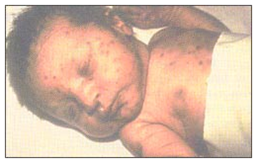
사진 설명을 입력하세요.
▴ 사진 226.선천성 풍진
참조문헌-CDC, USA
■ 선천성 풍진 증후군의 원인
● 풍진백신 예방접종을 과거에 한 번도 맞지 않았거나 풍진을 한 번도 앓은 적이 없어 풍진바이러스 감염병에 면역이 없는 임신부가 임신 첫 3개월 간(임신 1기) 풍진을 앓을 때 태아에게 풍진 바이러스 감염이 생겨 태아에게 풍진이 생길 수 있다.
● [부모도 반의사가 되어야 한다-소아가정간호백과]-제2권 소아 청소년 질병 및 안전사고 예방-풍진 예방접종,
● 제7권 소아청소년 감염병,
● 제25권 임신 분만 신생아 돌보기까지-풍진 참조.
● 태아가 자궁 내에서 풍진에 걸리면 특히 초기 임신 중 여러 종류의 선천성 기형이 태아에게 생길 수 있다.
● 그 풍진을 선천성 풍진 증후군이라고 한다.
● 선천성 풍진 증후군이 있으면 신생아에게 농아, 백내장, 소두증, 심장 기형 등 여러 가지 선천성 기형이 생길 수 있다.
■ 선천성 풍진 증후군의 증상 징후
● 선천성 풍진 증후군의 증상 징후는 다양하고 전형적인 증상 징후는 다음과 같다.
● 심한 선천성 풍진 증후군에 걸린 태아의 성장 발육이 지연되고 낙태되거나 유산이 될 수 있다.
● 선천성 풍진 증후군에 걸린 태아가 출생하면 신생아의 눈이 멀거나 귀가 먹히기도 하고, 심장 기형이 생길 수 있다. 저출생체중, 피부발진, 출생 후 신생아 호흡곤란증, 저아프가 스코아,신생아 신경기능 저하가 생길 수 있다.
● 태어난 후 그 외 여러 종류의 선천성 기형이 신생아에게 생길 수 있고 혈소판 감소증도 생길 수 있다.
● 신생아의 간, 지라, 임파선 등이 부을 수 있다.
● 그 외 소두증, 성장 발육 지연, 지능 저하, 학습 장애 등 증상 징후가 생길 수 있다.
■ 선천성 풍진 증후군의 진단
● 병력, 증상 징후, 진찰 소견 등을 종합해서 진단할 수 있다.
● 임신 첫 3개월 동안 임신부가 풍진을 앓은 경험이 있으면 선천성 풍진 증후군을 진단하는 데 아주 중요한 단서가 될 수 있다.
● 신생아의 인두 점액, 소변, 뇌척수액 등에서 얻은 피검물로 풍진 바이러스를 배양해서 확진할 수 있다.
● 혈중 풍진바이러스 항원, 풍진바이러스 항체 IgM 검사를 해서 진단하기도 한다.
● TORCH(선천성 거대세포감염병, 선천성 헤르페스 감염병, 선천성 톡소포자충증, 그 외 선천성 매독)을 서로 감별 진단한다.
■ 선천성 풍진 증후군의 치료
● 선천성 풍진 증후군을 치료하는 특효약도 없고 특별한 치료도 없다.
● 여러 가지 선천성 기형으로 인한 증상 징후에 따라 대증 치료를 한다.
소스; AAP News 8/2018 와 그 외
Copyright drleepediatrics.com 2/28/2026
Congenital Rubella Syndrome
Delete Featured Image
Please enter a photo description.
▴ Photo 226. Congenital Rubella
References – CDC, USA
■ Causes of Congenital Rubella Syndrome
● If a pregnant woman who has never received the rubella vaccine or has never had rubella before and is therefore immune to the rubella virus, contracts rubella during the first trimester of pregnancy, the fetus can become infected with the rubella virus, resulting in rubella infection.
● [Parents Should Become Half-Doctors Too – Pediatric Family Nursing Encyclopedia] – Volume 2, Prevention of Diseases and Accidents in Children and Adolescents – Rubella Vaccination,
● Volume 7, Infectious Diseases in Children and Adolescents,
● See Volume 25, Pregnancy, Delivery, and Newborn Care – Rubella.
● If a fetus contracts rubella in utero, it can cause various congenital malformations, especially during early pregnancy.
● This rubella is called congenital rubella syndrome.
● Congenital rubella syndrome can cause various birth defects in newborns, including deafness, cataracts, microcephaly, and heart defects.
■ Symptoms of Congenital Rubella Syndrome
● The symptoms of congenital rubella syndrome vary, but typical symptoms include the following:
● Fetuses with severe congenital rubella syndrome may experience growth and developmental delays, abortion, or miscarriage.
● If a fetus is born with congenital rubella syndrome, the newborn may be blind or deaf, or may develop heart defects. Low birth weight, skin rashes, postnatal respiratory distress, low Afgar scores, and neurological deficits in the newborn may also occur.
● After birth, newborns may develop various other congenital defects, including thrombocytopenia.
● The newborn’s liver, spleen, and lymph nodes may swell.
● Other symptoms and signs may include microcephaly, growth and development delays, intellectual disability, and learning disabilities.
■ Diagnosis of Congenital Rubella Syndrome
● A diagnosis can be made based on a comprehensive review of medical history, symptoms, and physical examination findings.
● A history of rubella infection in the pregnant woman during the first trimester of pregnancy can be a crucial clue in diagnosing congenital rubella syndrome.
● A definitive diagnosis can be made by culturing the rubella virus from specimens such as the newborn’s pharyngeal mucus, urine, or cerebrospinal fluid.
● Blood tests for rubella virus antigen and rubella virus antibody IgM can also be used to diagnose the disease.
● Differential diagnosis is made between TORCH (congenital cytomegalovirus, congenital herpes simplex, congenital toxoplasmosis, and other congenital syphilis).
■ Treatment of Congenital Rubella Syndrome
● There is no specific treatment or cure for congenital rubella syndrome.
● Treatment is symptomatic, based on the symptoms associated with various congenital anomalies.
Source: AAP News 8/2018 and others
Copyright drleepediatrics.com 2/28/2026